 Follow ASTCT®
Stem cell transplants can be effective clinical tools. But why a specific hematopoietic stem cell (HSC) transplant is, or is not, effective is not always clear.
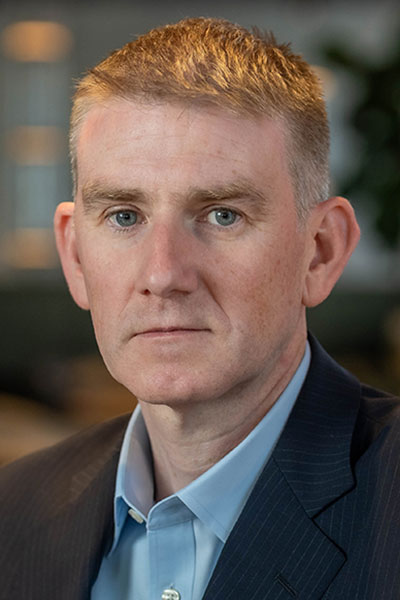
“We can deliver transplant cell therapy, it is something that works in our practice,” said Christopher Hourigan, DM, DPhil, FRCP, professor and director of the Virginia Tech Fralin Biomedical Research Institute Cancer Research Center in Washington, DC. “We need to make it work in theory, too.”
Seeking to bridge that gap, Dr. Hourigan will chair the concurrent session Are All HSCs Created Equal? on Thursday, Feb. 5, 10:30 a.m. – 12:00 p.m. MST in Ballroom I of the Salt Palace Convention Center.
“I really wanted to give the Tandem Meetings audience a chance to hear from these really thoughtful physician-scientists who are doing lab work that isn’t directly impacting them tomorrow, but 5-10 years from now is going to either help explain why things don’t work the way they do, or do work the way they do,” Dr. Hourigan said.
All HSC transplants are no more equal than all whole blood or plasma transfusions are equal, he noted. But far less is known about the variable components of stem cell transplants than is known about blood or plasma transfusions.
“You would think that someone would have asked what the constituent parts of a stem cell transplant are, just like you get with a complete blood count (CBC), the diversity and normal ranges,” Dr. Hourigan said. “Not until we start measuring HSCs with precision and start understanding the diversity of cells can we start making assumptions and useful predictions about what we’re dealing with.”
Liran Shlush, MD, PhD, professor and dean of the faculty of biology at Weizmann Institute of Science in Rehovot, Israel, will open the session with the latest findings in a novel reference model of circulating HSCs across the lifespan of healthy individuals.
Large population studies have identified CBC differences across healthy individuals as well as specific age- and disease-related changes that are used in daily clinical practice worldwide. Recent technological advances have made it possible to characterize HSCs in circulating blood to create a proof-of-concept model for both healthy HSC distribution and potential diagnostic applications in stem cell-related blood malignancies.
Michael Spencer Chapman, MBBS, PhD, academic clinical lecturer at Barts Cancer Institute, Queen Mary University of London and Wellcome Sanger Institute, Hinxton, UK, has identified persistent mutagenic DNA lesions in stem cells from multiple tissues arising from endogenous and exogenous mutagens, such as tobacco and chemotherapy, and further characterized the dynamics of long-term HSC engraftment.
“They have been doing some nice work on HSCs with longer-term clinical outcomes,” Dr. Hourigan said. “There is increasingly good evidence that as we age, the mutations we pick up in blood are associated with many different disease types and we’re giving people these mutations in stem cell transplants, along with other sources of functional heterogeneity. You can imagine that in the years to come we are going to have the opportunity to better characterize the cells we’re giving to patients. We may be running advanced diagnostics before we give patients a cell product.”
Saar Gill, MD, PhD, professor of medicine at the University of Pennsylvania and director of the Translational Center of Excellence in Genetically Engineered Hematopoietic Cell Transplantation, will discuss possibilities of engineering stem cell products to improve clinical efficacy. Similar universal, off-the-shelf approaches might be applicable to some diseases that require intensive hematopoietic ablation.
“My hope is that this session motivates people designing clinical trials to optimize approaches in practice,” Dr. Hourigan said. “Among the transplant community, there is a feeling that we can be more precise in the ways we give hugely effective cell therapies. We can apply more basic science to the ways we design therapies, tailor therapies and understand better what does and doesn’t work. I’m hoping hematopoietic cell transplant 10 years from now is going to be very different than it is now as we translate and implement some of this new science.”
On-demand content will be available for this session. Visit the 2026 Tandem Meetings website to browse the full program listing.
Watch 2026 Tandem Meetings sessions on demand

If you missed a session or wish to review a session from the 2026 Tandem Meetings, you can access on-demand recordings on the Tandem Meetings website. Registered participants have digital access to scientific plenary and concurrent sessions, oral abstract sessions, honorific lectures, symposia and educational tracks.