 Follow ASTCT®
The six presentations in the Best Abstracts Session, held Feb. 6 at the 2026 Tandem Meetings | Transplantation & Cellular Therapy Meetings of ASTCT® and CIBMTR®, spanned exciting new data across hematologic disorders and malignancies.
Key insights are summarized below. The entire session is available to in-person attendees and to those with registered digital access for on-demand viewing via the online program.
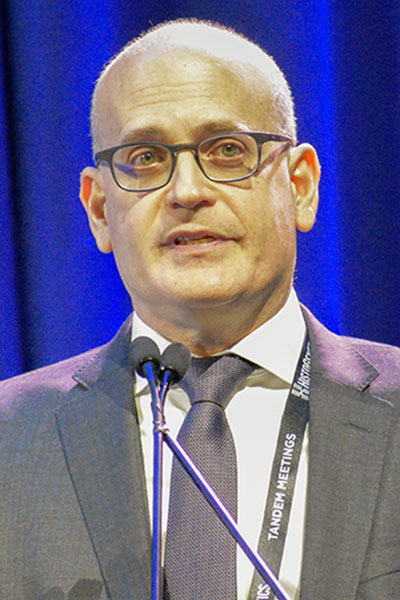
Clinical Outcomes from the Pooled Safety Analysis of CD19 Nex-T™ (BMS-986353), a Chimeric Antigen Receptor (CAR) T cell Therapy Manufactured Using a Next-Generation Process, in Severe Refractory Autoimmune Diseases: Results from Phase 1 Breakfree Studies
Ran Reshef, MD, MSc, shared some of the thinking behind his group’s Breakfree-1 and Breakfree-2 Phase I trials, where infusion of a novel CD19 CAR T-therapy — zolacabtagene autoleucel (zola-cel), formerly BMT-986353 — rapidly improved disease activity.
“Given the central role of autoreactive B-cells in autoimmune diseases, we hypothesized that a single infusion of a CD19 chimeric antigen receptor T-cell (CAR T)-therapy may lead to long-term treatment-free disease control, but may also allow repopulation of healthy naive B-cells in a way that would reset the immune system,” said Dr. Reshef, professor of medicine and director of the cell therapy program at Columbia University Irving Medical Center
The trials included patients with a high disease burden across indications. Clinical symptoms resolved in all but one patient with systemic lupus erythematosus (SLE); there was a 10-point median reduction in the SLEDAI-2K score at six months.
Similarly, zola-cel improved disease activity in patients with systemic sclerosis (SSc), myopathies and relapsing multiple sclerosis (RMS).
“The responses were durable,” said Dr. Reshef, adding that 91.6% of the patients remained off their disease-directed treatments.
Notably, most adverse events of interest with zola-cel were brief, manageable and completely reversible with no clinical sequelae. Building on these findings, the Phase II Breakfree SLE and Phase III Breakfree SSc trials have been launched and are enrolling patients.
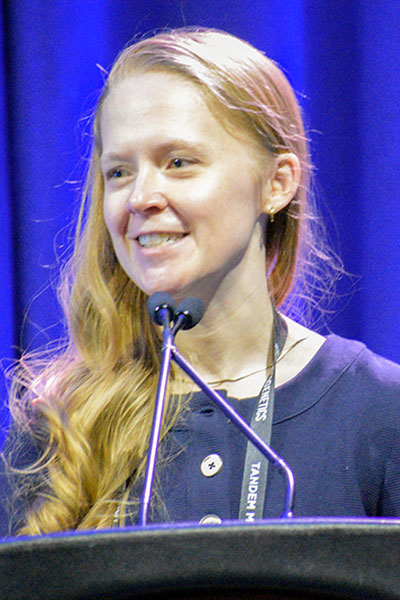
Early TCR Αβ and Γδ Repertoire Dynamics after Myeloablative Allo-HCT with Post-Transplant Cyclophosphamide
“Allogeneic stem cell transplantation (alloSCT) remains one of the most powerful immunotherapies, but it is also one of the most complex,” said Elizabeth Krieger, MD, a pediatric hematologist-oncologist at Virginia Commonwealth University, “Donor T-cells are essential for graft-versus-leukemia effects and viral protection, but are also responsible for major complications such as GVHD.”
To delineate the impact of the T-cell repertoire post-transplant on graft-versus-host disease (GVHD) pathogenesis, Dr. Krieger and colleagues used high-throughput RNA sequencing to analyze samples from patients with hematologic malignancies who had received alloSCT and cyclophosphamide prophylaxis for GVHD.
Their data showed early decline in the T-cell receptor (TCR) diversity across TCRα/β/γ/δ compartments in the first 30 days post-transplant, with partial recovery of clonal diversity at 60 days.
While cautioning that immune reconstitution may not be random and could be shaped by donor age or key clinical events such as cytomegalovirus (CMV) reactivation, Dr. Krieger added: “These early clonal dynamics represent a critical and potential modifiable window and may inform future strategies to optimize immune recovery [post-transplant] while minimizing toxicity.”
Durable Clinical Benefits with Exagamglogene Autotemcel for over 5 Years of Follow-up in Transfusion-Dependent Thalassemia and Sickle Cell Disease with Recurrent Vaso-Occlusive Crises
Exagamglogene autotemcel (exa-cel) is the first, and to date only, FDA-approved gene therapy for patients aged 12 years and older with either sickle cell disease (SCD) with recurrent vaso-occlusive crises (VOC) or transfusion-dependent β-thalassemia (TDT). Prior analyses showed that exa-cel–mediated fetal hemoglobin (HbF) reactivation potentiates elimination of VOC in SCD and of transfusion-dependence in TDT.
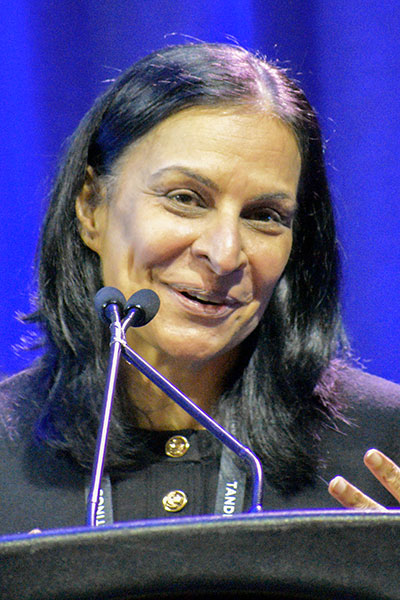
Monica Bhatia, MD, associate professor of pediatrics and director of the Pediatric Stem Cell Transplant Program at Columbia University Medical Center, shared long-term follow-up data for 46 patients with SCD and 56 with TDT from the pivotal Phase III CLIMB SCD-121, CLIMB THAL-111, and CLIMB-131 clinical trials.
Exa-cel demonstrated durable clinical benefit among all SCD and TDT participants across the three studies, with a follow-up that exceeded six years. In CLIMB SCD-1212, over 91% of participants were VOC-free and 98% were hospitalization-free for ≥ 12 months. In the CLIMB-131 SCD cohorts, 100% of participants were VOC-free and hospitalization-free for ≥ 12 months. Nearly all (98%) patients with TDT achieved transfusion-independence in both cohorts.
“Both patient populations have durable increases in their pan-cellular HbF as well as stable allelic editing,” Dr. Bhatia concluded. “Long-term follow-up continues … but the data that we have does demonstrate that exa-cel has the potential to provide a one-time cure to patients with hemoglobinopathies.”
BET Inhibition Blunts Antibody Production and Macrophage Mediated Fibrosis in Bronchiolitis Obliterans Chronic GVHD
Chronic GVHD is the leading cause of mortality in alloSCT recipients. GVHD pathogenesis, which begins with acute inflammation and tissue injury, eventually leads to fibrosis in skin and lungs.
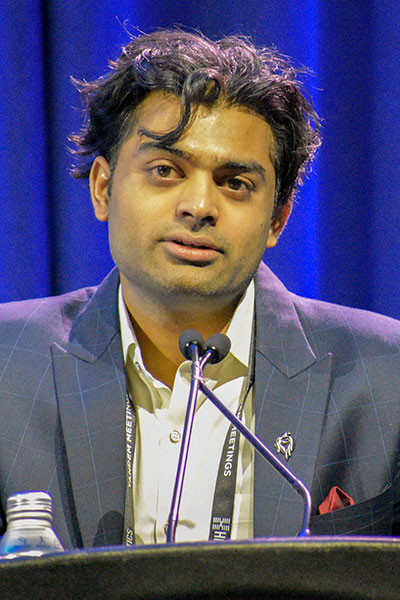
“Bronchiolitis obliterans syndrome (BOS) and pulmonary manifestations of vascular disease are among the most therapeutically resistant complications post-transplant,” said Rathan Kumar, a PhD candidate in the Biomedical Sciences Graduate Program of Ohio State University.
Kumar and colleagues sought to delineate the mechanisms underlying BOS and chronic GVHD, with a focus on bromodomain and extra-terminal (BET) proteins, a family of epigenetic regulators that drive inflammatory and oncogenic gene programs.
In preclinical studies in vitro and in vivo, in BOS chronic GVHD mouse models, pharmacological inhibition of BET proteins suppressed germinal center T- and B-cells, depleted antibody-secreting cells in the lung and depleted interstitial, but not alveolar, macrophages.
Notably, these cellular and molecular changes translated to improved lung function in mouse model studies.
Kumar said that these data support potential assessment of BET inhibitors in clinical trials, especially in the second-line combination therapy setting for chronic GVHD.
First 23-Patient Safety and Efficacy Data from Nexicart-2, the First U.S. Trial of CAR-T in R/R Light Chain (AL) Amyloidosis, Nxc-201
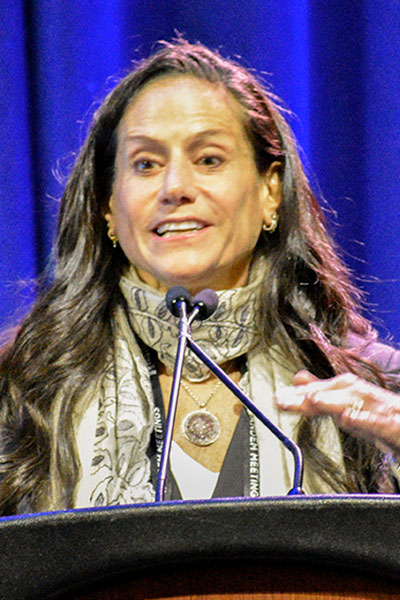
Heather J. Landau, MD, an associate attending physician on the Adult Bone Marrow Transplant, Cellular Therapy, and Multiple Myeloma services at Memorial Sloan Kettering Cancer Center, noted that United States (U.S.) claims data indicate that over 30,000 patients in the U.S. are either living with or will develop relapse/refractory amyloid light chain (AL) amyloidosis, a disease without a single available FDA-approved drug.
NEXICART-2 is a Phase I/II trial of NXC-201 — an autologous BCMA-targeted CAR T-therapy optimized for rapid manufacturing — in 40 patients with relapsed/refractory AL amyloidosis who have been exposed previously to bortezomib and anti-CD38 monoclonal antibodies.
The Phase I portion was completed without any dose-limiting toxicities. The Phase II dose-expansion portion is ongoing, with the goal of submitting a regulatory application for review to the U.S. FDA once data become available, Dr. Landau said.
Overall, of the 23 patients who received NXC-201 to date, 74% achieved hematologic complete remission and 67% had organ response.
Dr. Landau summarized the safety findings by noting that cytokine release syndrome “was all low grade and there was no neurotoxicity of any kind” and that “91% of patients remain on study, in hematologic remission.” Of those remaining patients, five are one year out from the CAR T-infusion and two are over 15 months out from the CAR T-infusion.
Remodeling the Multiple Myeloma Bone Marrow Microenvironment with CART Cells to Overcome Resistance
Despite high response rates in patients with relapsed/refractory multiple myeloma (RRMM) who receive approved and commercially available CAR T-therapies, the majority experience disease relapse within five years following treatment.
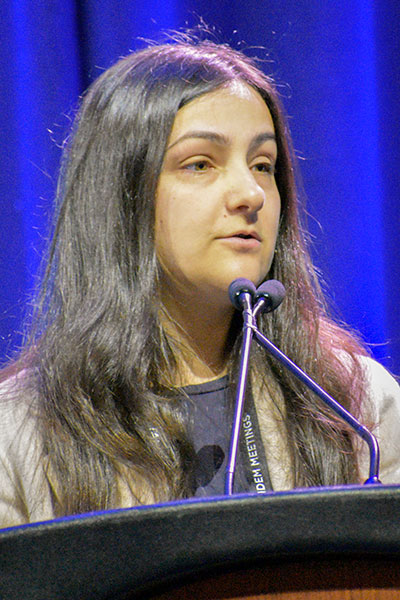
Jennifer Feigin, PhD candidate at the Mayo Clinic Graduate School of Biomedical Sciences, shared findings from research on the reasons underlying relapse following BCMA-targeted CAR T-therapy.
Single-cell RNA sequencing analysis of the tumor microenvironment showed that cancer-activated fibroblasts (CAFs) that express fibrinogen activation protein (FAP) are abundant in the bone marrow of patients with RRMM who did not respond to CAR T-therapy, compared to responders. These CAFs inhibit the function of CAR Ts in vitro and in mouse models of myeloma.
Feigin and colleagues developed a novel CAR T approach for overcoming this CAF-mediated inhibition of the anti-myeloma activity of CAR Ts. They generated CAR constructs, which they called “STriKEs,” that contain the BCMA-targeting component along with a module that enables transient secretion of novel peptide molecules.
Two CAR T STriKE constructs, designed to induce innate macrophages to phagocytose CAFs, cleared both the xenografted myeloma tumor and CAFs in vivo, in both murine and humanized mouse models.
“Based on these results, we are very much hoping to move this BCMA CAR T STriKE therapy into the clinic,” Feigin said.
Watch 2026 Tandem Meetings sessions on demand

If you missed a session or wish to review a session from the 2026 Tandem Meetings, you can access on-demand recordings on the Tandem Meetings website. Registered participants have digital access to scientific plenary and concurrent sessions, oral abstract sessions, honorific lectures, symposia and educational tracks.