 Follow ASTCT®
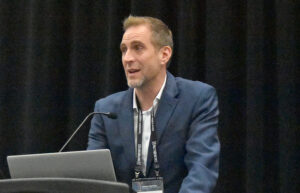
During the Feb. 6 advanced practice provider (APP) session Aplastic Anemia & BMT: Where We Stand, two experts discussed the use of alternative-donor transplantation for severe aplastic anemia (SAA) and potential predictive biomarkers of treatment success.
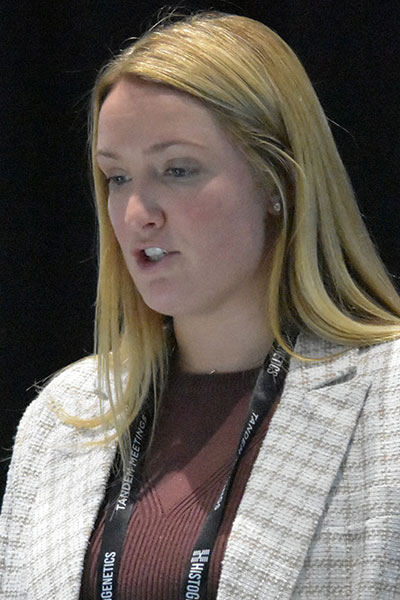
Jillian Haslett, CPNP-AC, an APP at Memorial Sloan Kettering Cancer Center, began by reviewing the pathophysiology and disease classifications of acquired aplastic anemia (AA).
Acquired AA is initiated by an exposure that triggers an autoimmune T-cell response, leading to T-cell activation, expansion and migration to the bone marrow, and resulting in bone marrow suppression. AA is classified as severe (SAA), very severe (vSAA) and non-severe (NSAA).
Historically, the treatment for SAA includes a matched sibling donor. This is especially the case for patients under the age of 40. However, if a human leukocyte antigen (HLA)-identical sibling donor is unavailable, immunosuppressive therapy (IST) is an option, but it remains unclear whether children should undergo IST or opt for an alternative donor transplant (ADT).
Outcomes with traditional IST show that overall survival was significantly improved with horse antithymocyte globulin (ATG). In adults, adding eltrombopag improved the overall response rate with IST. However, for pediatric patients, combining IST and eltrombopag does not enhance outcomes.
In terms of transplantation, a trial of 1,448 patients in the Working Party for Severe Aplastic Anemia-European Society for Blood and Marrow Transplantation (WPSAA-EBMT) registry compared the outcomes of matched sibling donor (MSD) versus matched unrelated donor (MUD) transplants. The results demonstrated that MUD transplants were not statistically inferior to MSDs in treatment of acquired AA. However, these studies found that patients who receive MUD transplants may face an increased risk of acute and chronic graft-versus-host disease (GVHD).
The diversity of donor populations is also a concern.
“MUDs are not readily available for all patients. Patients of European ancestry have a greater than 70% chance of having a full HLA match. However, for other ethnic groups, it drops pretty substantially. This tells us we need other donor types for patients who are underrepresented,” Haslett said.
Haploidentical bone marrow transplant might play a role in increasing equity of access. Results from a Phase II trial in adult and pediatric patients with SAA demonstrate that haploidentical bone marrow transplant with post-transplant cyclophosphamide (PTCy) results in rapid hematopoietic reconstitution and high GVHD survival.

Joseph H. Oved, MD, associate professor of pediatrics and medicine at Columbia University Irving Medical Center, discussed predictive biomarkers and future directions in treatment of AA.
Because nearly half of patients respond to immunosuppressive therapy (IST) and do not require a transplant, many are now questioning which option is better for initial treatment. Dr. Oved has taken this a step further by asking whether it is possible to identify patients who do not need a transplant.
He hypothesized that delineating patterns of clonal hematopoiesis in pediatric patients with SAA, including immune escape and myelodysplastic syndrome (MDS) somatic alteration, may provide insights to personalize therapeutic options, such as upfront IST versus alternative approaches.
A retrospective single-center study of pediatric patients with AA was completed to test this hypothesis. Results demonstrated that 65% of patients exhibited clonal hematopoiesis and that MDS-associated clonal hematopoiesis is mutually exclusive from somatic loss of HLA class 1 expression. Further, the need for a second therapy and event-free survival after IST inversely correlated with the presence of clonal hematopoiesis.
“We then thought, what else can we do to try and drill down this cohort? So, we went back to the molecular biology of why these things are occurring,” Dr. Oved said.
This returned them to 1988 research that showed that T-cells from AA patients inhibited in vitro hematopoiesis in an interferon-gamma (IFNγ) dependent way. Since then, about 40 years of published observations have consistently confirmed this trend.
There are now precision therapies in development for AA that are focused on the IFNγ pathway, such as the National Heart, Lung, and Blood Institute (NHLBI) trial investigating the effects of ruxolitinib augmented IST in adult patients. However, a major side effect of ruxolitinib is suppression of counts. Given this, Dr. Oved has initiated a trial of emapalumab, which has a very clean side effect profile.
Watch 2026 Tandem Meetings sessions on demand

If you missed a session or wish to review a session from the 2026 Tandem Meetings, you can access on-demand recordings on the Tandem Meetings website. Registered participants have digital access to scientific plenary and concurrent sessions, oral abstract sessions, honorific lectures, symposia and educational tracks.