 Follow ASTCT®
During the Feb. 4 plenary session Access/Logistical Challenges and Development of Novel Therapies of the 2026 Tandem Meetings | Transplantation & Cellular Therapy Meetings of ASTCT® and CIBMTR®, a panel of experts reviewed the current state of gene therapy, barriers to access and upcoming developments.
In Vivo Genome Editing of Hematopoietic Stem Cells for the Treatment of Sickle Cell Disease
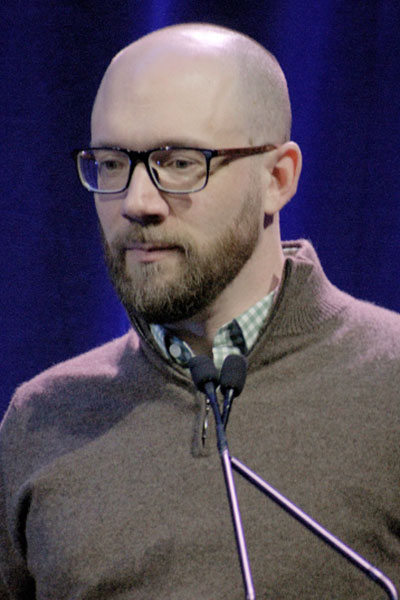
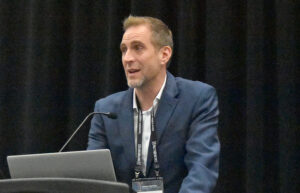
Francis Pierciey, MSc, vice president and program lead at Tessera Therapeutics, discussed in vivo gene editing of hematopoietic stem cells (HSCs) to treat sickle cell disease (SCD).
Many therapeutic approaches and gene-modification strategies under investigation for ex vivo use can also be applied to in vivo gene therapy; the primary difference lies in the delivery method. However, lipid nanoparticles (LNPs) are the only delivery vehicle that have demonstrated effective editing in nonhuman primate preclinical models, Pierciey explained.
He said that when assessing how close in vivo gene therapy is to treating SCD, it is important to establish a target product profile that outlines key characteristics of the drug, such as safety, efficacy and route of administration. Usually, these profiles have both a minimum and an optimal product profile. Data from HSC transplantation and ex vivo gene therapies suggest a clinical benefit with gene correction in approximately 20% of long-term HSCs (LT-HSCs).
“I do think that 20% gene correction will result in significant clinical benefit, but when it comes to all patient populations, we may need to get to that 30%,” Pierciey said.
Researchers have developed both RNA gene writing and LNP delivery platforms to efficiently engineer LT-HSCs in vivo. Preclinical studies demonstrate robust levels of hemoglobin subunit beta (HBB) editing with this platform. An ~35% HBB correction was achieved in mice engrafted with SCD donors. In nonhuman primates, 40-60% of LT-HSCs had at least one edited allele, which is encouraging as this aligns with the range observed in ex vivo products.
Challenges In the Translation of Novel Cell and Gene Therapies from Bench to Bedside
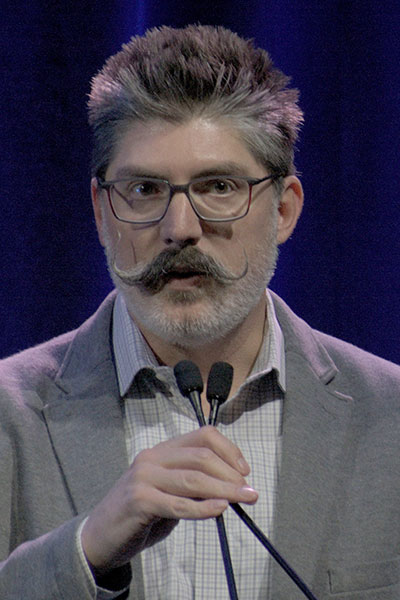
Frederick Locke, MD, department chair at H. Lee Moffitt Cancer Center and Research Institute, discussed challenges in translating cell and gene therapies from bench to bedside, outlining what it takes to bring cell and gene therapies to the clinic, secure FDA approval and achieve widespread commercial use.
To bring a cell and gene therapy to the clinic, you need an idea, a funding source, preclinical data demonstrating plausible efficacy and safety, and a regulatory roadmap. A key challenge in the early development of these therapies is that Phase I cell therapy trials are conducted primarily in China and Australia.
“If we in North America want to compete, we’re going to have to change our regulatory framework, look at the cost carefully of this whole process [and] think about what’s required to run these cell therapy trials,” Dr. Locke said.
To obtain FDA approval, you need human efficacy and safety data from a Phase I study, a patient population with an unmet need and clarity on return for sustained investment. A key challenge in this process is intellectual property (IP) abandonment, which occurs when it becomes too costly to secure FDA approval. Dr. Locke encouraged investigators who license their IP to include an out clause that allows them to reclaim the IP for their own development if necessary.
Finally, to achieve widespread commercial use, a therapy must be logistically manageable, broadly available, financially sustainable and have improved outcomes over less complex therapies, he noted.
Challenges of Implementation of Commercial Therapy in the Real World
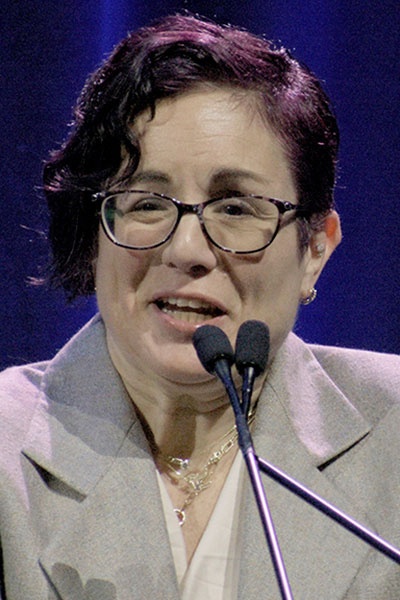
Julie Kanter, MD, professor and director of the adult sickle cell program at the University of Alabama at Birmingham, discussed real-world challenges in implementing commercial therapy.
By late 2025, there were over 3,600 active and planned trials for cell, gene and advanced therapies, along with 28 therapies approved by the FDA. Some of the barriers to non-CAR-T ex vivo gene therapies include mobilization/collection, manufacturing slots, logistics, conditioning, inpatient case, workforce readiness and payer authorization.
Dr. Kanter used SCD as a case study to highlight these challenges. The initiation, update and rollout of gene therapy for SCD have progressed more slowly than expected, and there are currently no public utilization figures for FDA-approved SCD treatments. Several factors have contributed to this delayed progress, including limited geographic access to qualified treatment centers, constraints in hospital and manufacturing capacity, long lead times to secure coverage and the need for additional services such as fertility preservation.
Multi-disciplinary care from various specialties and ongoing support from SCD experts before, during and after therapy are essential for successful HSC transplant. Unfortunately, the current model for stem cell transplants for SCD remains fragmented.
“What we also now realize is that there is a huge in-between time while patients wait for gene therapy to be ready, and it needs to be clear who’s treating that individual in this in-between time, not post-treatment,” said Dr. Kanter.
To overcome these challenges, she advocated for a team-based approach to gene therapy, which includes communication protocols, team member responsibilities and monthly meetings to discuss a patient’s treatment status and management plan.
Watch 2026 Tandem Meetings sessions on demand

If you missed a session or wish to review a session from the 2026 Tandem Meetings, you can access on-demand recordings on the Tandem Meetings website. Registered participants have digital access to scientific plenary and concurrent sessions, oral abstract sessions, honorific lectures, symposia and educational tracks.