 Follow ASTCT®
During the Feb. 4 concurrent session Future of iPSC in Transplantation and Gene Therapy: Having Skin in the Game, three experts discussed the use of induced pluripotent stem cells (iPSCs to reduce the need for patient or donor-derived cells.
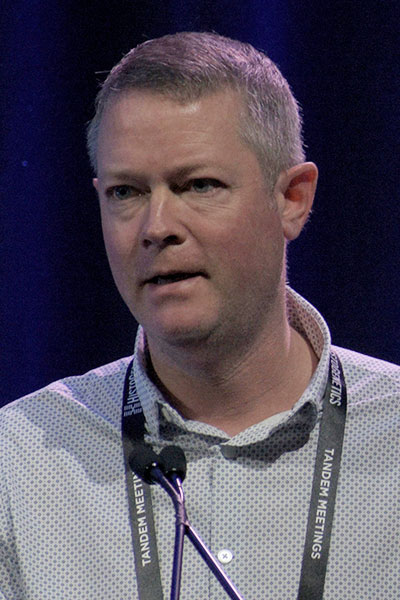
Frank Cichocki, PhD, associate professor at the University of Minnesota, discussed the generation of natural killer effector cells from iPSCs. This approach is designed to address the critical limitation of patient-sourced cell therapies and to deliver consistent, reliable product forms that could enable unprecedented scalability.
“The idea is that you can create an off-the-shelf product so you can get billions of cells from manufacturing, you can freeze it down, you can have them ready in bags to ship off to different sites and right at the bedside for whatever patients are acceptable for treatment and have them ready without any delay,” Dr. Cichocki explained.
Dr. Cichocki’s group has generated multiple multiplex gene-edited products tailored to different cancer types. The first cell line they developed for clinical application was iDuo (FT596). These cells were designed to target both CD19 and CD20 on malignant B cells, enhance effector functions and selectively target malignant cells over healthy cells that express CD19.
FT596 was evaluated in a Phase 1 trial for patients with relapsed or refractory B-cell lymphoma. FT596 was well tolerated and induced complete responses in many patients, including those who relapsed after CD19 chimeric antigen receptor (CAR) T-cell therapy.
Dr. Cichocki noted barriers, including the durability of clinical responses relative to certain CAR T-cell therapies and declining investment and enthusiasm for cellular immunotherapy. But moving forward, he is interested in expanding his focus to solid tumors and is now starting a clinical trial of FT536 for glioblastoma.
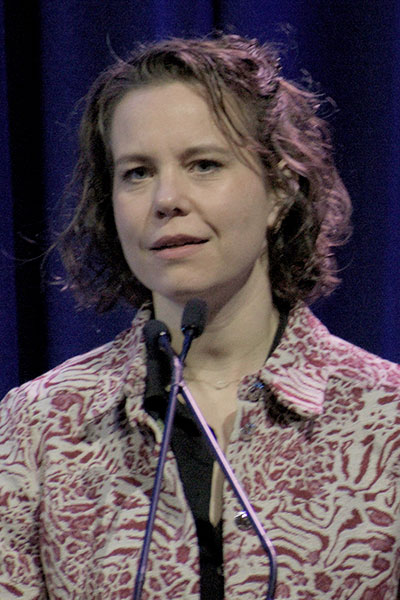
Sjoukje van der Stegen, PhD, senior group leader of immune cell engineering and development at Chan Zuckerberg Biohub Network, discussed the development of iPSC-derived CAR T-cells.
Dr. van der Stegen’s group originally developed iPSC-derived CAR T-cells by reprogramming T-cells into iPSCs and then engineering a CAR T into the iPSCs using antiviral transduction. Despite expressing their endogenous T-cell receptor (TCR), these CAR T-cells did not acquire a conventional CD4 or CD8αβ T-cell phenotype, but rather an innate-like phenotype.
Dr. van der Stegen set out to find why these cells developed such a phenotype. To do this, she examined different steps T-cells undergo as they mature. The key steps include notch stimulation and rearrangement of the TCR-β chain.
What she found is that fibroblast-derived iPSCs differentiate normally toward the αβ T-cell phenotype, while T-cell-derived iPSCs stall in an abnormal developmental state due to rearranged TCRs. Importantly, further studies showed that these problems caused by TCR rearrangements could be fixed through increasing notch signaling.
This led Dr. van der Stegen to consider whether delaying CAR expression could enhance adaptive T-cell maturation. She found that delaying CAR expression onset enabled double-positive (DP) T-cell development and terminal CD8αβ iT-cell expansion in the absence of a TCR.
This work has brought these cells closer to the required phenotype, but further improvements are possible.
“We’re being hypercritical of the function of our cells. But I think for us to go into the next generations to make these cells better, we need to be critical of their performance. So, what can we do constantly to further improve these cells? One, we can do genetic engineering strategies to make it better, and the other thing is we can play around with the differentiation protocol,” said Dr. van der Stegen.
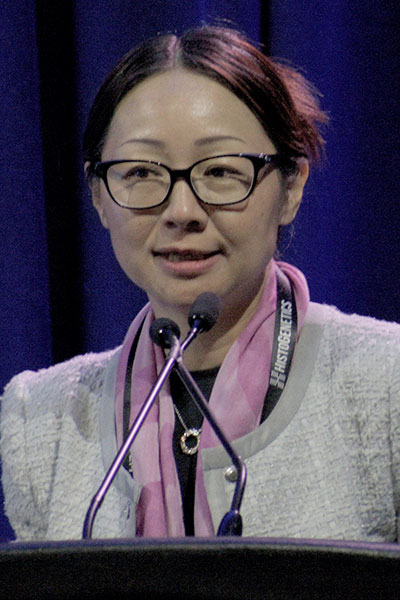
Lili Yang, PhD, professor at the University of California, Los Angeles, discussed the role of stem cell-engineered allogeneic CAR-natural killer T (NKT) cells for off-the-shelf cancer therapy.
NKT cells are potent tumor-killing cells that are ideal for off-the-shelf allogeneic cell therapy; however, human blood contains very few of these cells.
Dr. Yang has created a method to produce a high yield of allogeneic CAR-NKT-cells suitable for commercial use. She investigated the mechanism of action of these cells and found that their triple CAR/TCR/NKR tumor-targeting mechanism prevents immune invasion. Further, these cells alter the tumor microenvironment through effective and selective depletion of CD1d+ tumor-associated macrophages and myeloid-derived suppressor cells. They also reduce cytokine-release macrophages, lending to improved safety.
In vivo efficacy studies demonstrate potent antitumor efficacy, while in vivo studies demonstrate effective tumor homing, clonal expansion and long-term persistence.
“It’s taken us a decade from thinking about harnessing unconventional T-cells using NKT as a spearhead and then going all the way to translation,” Dr. Yang said. “I’m happy to say that we are at the IND [Investigational New Drug] stage now.”
Watch 2026 Tandem Meetings sessions on demand

If you missed a session or wish to review a session from the 2026 Tandem Meetings, you can access on-demand recordings on the Tandem Meetings website. Registered participants have digital access to scientific plenary and concurrent sessions, oral abstract sessions, honorific lectures, symposia and educational tracks.