 Follow ASTCT®
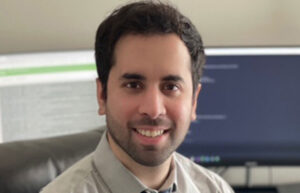
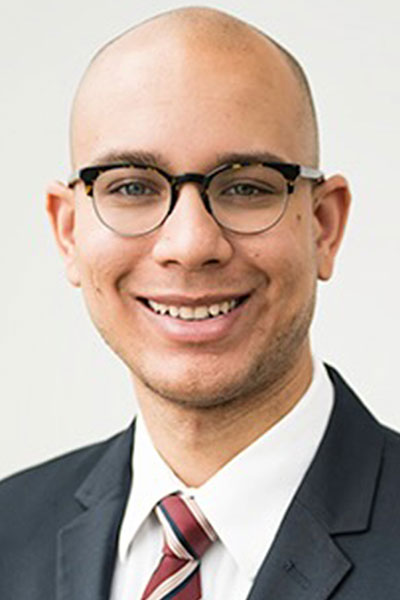
Recipient: H. Moses Murdock, MD, clinical fellow in hematology/oncology, Dana-Farber Cancer Institute
Project title of research award: Serial NGS-MRD Before and After Transplant to Predict Relapse in MDS and AML
What does this recognition mean to you?
“I am deeply grateful to the ASTCT for the New Investigator Award, as it presents critical support as I transition from clinical fellow to early faculty. This recognition is a meaningful validation of my long-term goal of refining post-transplant relapse prediction to improve outcomes for patients with myeloid neoplasms undergoing transplantation and cellular therapy. I also feel a strong sense of responsibility to make the most of this support, as I owe it to the patients I see in clinic to pursue rigorous scientific inquiry that directly addresses the challenges they face when confronting aggressive blood cancers.”
How will this award facilitate your ongoing work?
“This award will allow me to dedicate significant time and energy over the next two years to investigate peri-transplant next-generation sequencing-based measurable residual disease (NGS-MRD). It will facilitate protected research time, which is essential for the successful completion of these projects. In addition, I look forward to connecting with the broader ASTCT community, including faculty, fellows, allied health professionals, clinical trial teams and cooperative groups. It is only by working in a collaborative spirit, across disciplines and institutions, that my long-term goal of developing novel and actionable tools for post-transplant relapse prediction can be realized.”
How did you first become interested in transplantation and cellular and gene therapy?
“My grandfather, Heardley Murdock Sr., passed away from acute myeloid leukemia (AML) when I was a child. He never made it to allogeneic transplantation, which in his case represented the only chance for a cure. During medical school, I developed an interest in the molecular genetics of myeloid neoplasms and studied the prognostic significance of genetic alterations at AML diagnosis. Later, as an internal medicine intern at Brigham and Women’s Hospital, I had the privilege of caring for patients admitted to the hospital for receipt of a modified transplant protocol on a clinical trial, while simultaneously conducting correlative NGS-MRD analyses. This combination of bedside experience and scientific investigation cemented my commitment to translational work in transplantation and cellular and gene therapies.”
How do you hope your work influences the field?
“In routine clinical practice, post-transplant relapse risk estimation for myeloid neoplasms relies on diagnostic features and in pre-transplant remission assessments. However, many patients lack a suitable molecular marker for tracking disease, and currently available molecular-agnostic MRD strategies face challenges related to sensitivity and standardization. By investigating and validating NGS-MRD, I hope to help establish a broadly applicable tool for patients undergoing transplantation. Additionally, through the study of serial molecular assessments, my goal is to develop a framework for dynamic risk estimation that could serve as a platform for the study of relapse-mitigation strategies, such as maintenance therapy.”
What excites you most about the future developments in the field of transplantation and cellular and gene therapy?
“Over the course of my training, I have witnessed the impact of clinical and translational research on patient outcomes and clinical decision-making. Advances in graft-versus-host disease prevention and treatment, along with expanded donor options, have made life-saving transplantation safer and more widely accessible. We are also beginning to leverage molecular status to better determine who should proceed to transplant, and when, such as in NPM1-MRD guided treatment plans. While relapse remains a major challenge, I am particularly excited by the potential of rationally deploying safe, tolerable and effective post-transplant maintenance therapies. FLT3-MRD guided post-transplant tyrosine kinase inhibitor therapy represents a notable exemplar of this approach. NGS-MRD, which is the focus of my work, may provide a powerful means to more precisely guide these strategies, expanding the population for whom we can sensitively detect disease with potential clinical actionability.”
The ASTCT New Investigator Awards (NIAs) are designed to encourage clinical and/or laboratory research by young investigators in the field of hematopoietic cell transplantation, cellular therapy and/or gene therapy. This includes application of these therapies to malignant diseases, both hematologic and solid tumors, non-malignant diseases, including hemoglobinopathies, immune deficiencies and autoimmune diseases. The award provides $50,000 per year for two years in support of research costs and/or salary. Visit the ASTCT website to learn more about the award.
Watch 2026 Tandem Meetings sessions on demand

If you aren’t able to make it to a live session during the 2026 Tandem Meetings — or you want to revisit a session — you can watch on-demand recordings within hours of the live presentations via digital access.