 Follow ASTCT®
Six speakers presented recent and significant original research on the use of chimeric antigen receptor T-cell (CAR T) and transplant approaches in the treatment of patients with acute lymphoblastic leukemia (ALL) during the Feb. 5 Oral Abstract Session E of the 2026 Tandem Meetings | Transplantation & Cellular Therapy Meetings of ASTCT® and CIBMTR®.
Key take-home messages from each presentation are summarized below, and the entire session is available to in-person attendees and to those with registered digital access for on-demand viewing via the online program.
Mature Outcomes from the Phase I Trial of Orca-T and Allogeneic CD19/CD22 CAR-T cells for Adults with High-Risk B-ALL
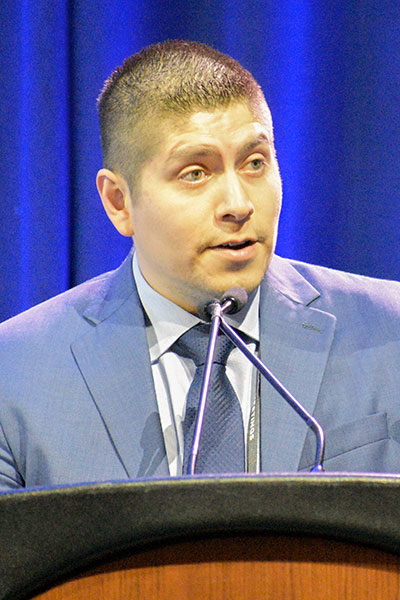
Alfonso Molina, MD, MPH, discussed the final safety and anti-tumor efficacy findings for a Phase I trial of combined treatment with allogeneic anti-CD19/CD22 CAR T therapy and Orca-T myeloablative graft-engineered hematopoietic stem cell transplant (HSCT) in patients with high-risk B-cell ALL (B-ALL).
The combination approach yielded disease-free survival (DFS) and overall survival (OS) rates of 100% in 16 patients. There was no evidence of graft failure or severe CAR-mediated toxicity.
“In adults with high-risk B-ALL, [combination cellular therapy] with allogeneic CAR19/22 and Orca-T led to durable remission,” warranting further investigation of this therapeutic strategy in high-risk B-cell malignancies, said Dr. Molina, a hematology and medical oncology fellow at Stanford University.
Patient Characteristics, Toxicity, and Response after Real World Administration of Obecabtagene Autoleucel and Brexucabtagene Autoleucel for Relapsed Acute Lymphoblastic Leukemia: A Rocca Analysis
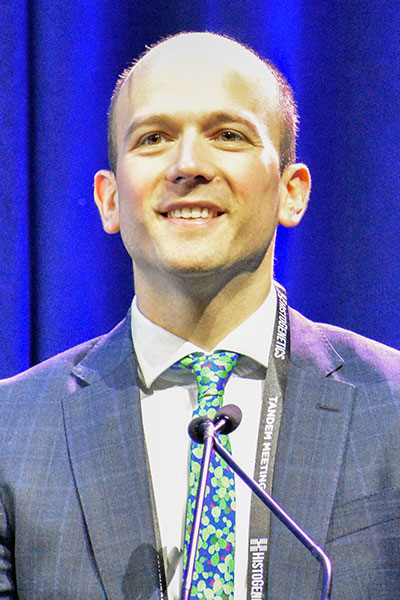
Yannis Valtis, MD, presented a Real-World Outcomes Collaborative of CAR-T in Adult ALL (ROCCA) dataset analysis for obecabtagene autoleucel (obe-cel) and brexucabtagene autoleucel (brexu-cel), two CD19-targeted CAR T-therapies approved by the U.S. FDA for treating adults with relapsed/refractory (R/R) B-ALL.
“The ROCCA registry enabled the first real-world analysis of obe-cel for R/R B-cell ALL,” said Dr. Valtis, an assistant attending physician at Memorial Sloan Kettering Cancer Center.
Consistent with data from clinical trials, unadjusted analyses showed that obe-cel was associated with lower rates of cytokine release syndrome and immune effector cell-associated neurotoxicity syndrome compared to brexu-cel. However, early immune effector cell–associated hematotoxicity rates with obe-cel were higher.
Dr. Valtis noted that longer follow-up is needed to determine the durability of obe-cel responses, and that the role of maintenance therapy — including allogenic stem cell transplantation (alloSCT) and tyrosine kinase inhibitors (TKIs) — needs to be further explored.
Allogeneic Stem Cell Transplant Results in T-cell Prolymphocytic Leukemia (T-PLL): A Collaborative Multi-Center Study Cohort
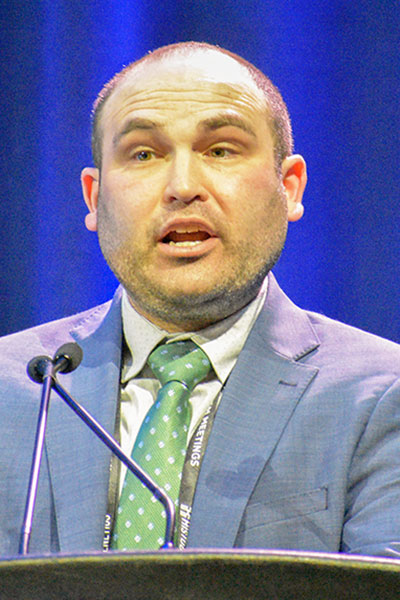
Zachary Braunstein, MD, a hematology/medical oncology fellow at Ohio State University, presented an analysis of alloSCT in the treatment of T-cell prolymphocytic leukemia (T-PLL), an understudied, rare and extremely aggressive malignancy with poor prognosis and limited therapeutic options.
Dr. Braunstein and colleagues retrospectively analyzed data for 572 patients diagnosed with T-PLL at 21 academic cancer centers, 169 of whom received alloSCT.
The one-, three-, and five-year rates of progression-free survival (PFS) and overall survival (OS) were higher for alloSCT recipients, while the rates of cumulative incidence of relapse and non-relapse mortality (NRM) were lower. There were no significant differences in PFS or OS outcomes by type of conditioning regimen or use of post-transplant cyclophosphamide (PTCy) for graft-versus-host disease (GVHD) prophylaxis.
Summarizing the analysis, Dr. Brunstein said that alloSCT “significantly improved outcomes for patients with T-PLL, compared to those who did not proceed with transplant, which represents the strongest data to date showing that alloSCT should be the standard of care for patients in remission with T-PLL.”
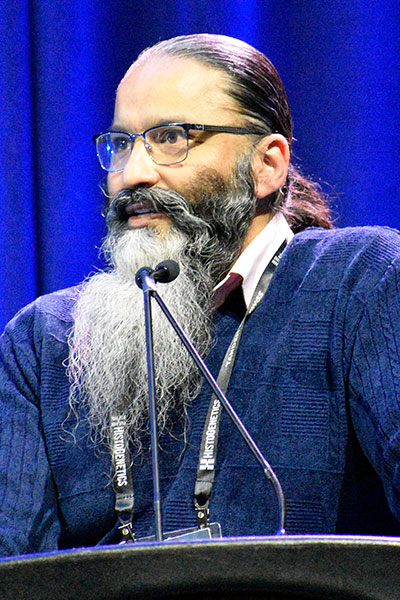
Chimeric Antigen Receptor T-cell Persistence at Month 3 Predicts Clinical Outcomes in Adult Patients with relapsed/refractory B-cell Acute Lymphoblastic Leukemia Treated with Obecabtagene Autoleucel
Obe-cel received FDA approval based on data from the Phase Ib/II FELIX trial, which showed complete remission (CR) and complete remission with incomplete hematologic recovery (CRi) rates of 78% in patients with relapsed/refractory B-ALL, but response was not universal in patients who received obe-cel, and identifying factors that may predict response and long-term survival outcomes can aid clinical decision-making, said Karamjeet Sandhu, MD, assistant professor in the Department of Hematology and Hematopoietic Cell Transplantation at City of Hope Cancer Center.
Beginning with a multivariate analysis of FELIX data that showed that CAR T-cell persistence, as a time-dependent variable, was predictive for event-free survival (EFS) and OS, Dr. Sandhu and colleagues performed a post hoc analysis to assess the impact of CAR T-cell persistence at three months (M3) on survival outcomes in patients who responded to obe-cel, and in patients with deep minimal residual disease negative (MRD-negative) remission who did not receive post–obe-cel SCT.
“Ongoing CAR T-cell persistence at M3 was associated with longer event-free survival (EFS) and OS in patients who remained in remission at M3, including those with deep MRD-negative remission and no post–obe-cel SCT, compared with patients who had loss of persistence,” Dr. Sandhu concluded, adding that these data suggest that persistence at M3 may be a predictive marker of long-term outcomes.

CD19 CAR T-cell Therapy in Infant B-ALL: Durable Remissions, Relapse Patterns, and Molecular Correlates
Although CAR T-therapy has emerged as a definitive treatment in infants with B-cell ALL, there is a paucity of evidence in this setting. To assess the long-term efficacy of CAR T-therapy for relapsed/refractory infant B-cell ALL, Kaylyn Lyons, MD, and colleagues conducted a retrospective analysis of data for 33 infants aged less than one year who received CD19 CAR T-therapy across four clinical trials or commercial tisagenlecleucel.
“We saw excellent responses, with 31 of the 33 patients achieving MRD-negative CR at day 28,” said Dr. Lyons, a pediatric hematologist/oncologist at the Children’s Hospital of Philadelphia.
With a median follow-up of six years, most patients stayed in remission with CAR T-therapy alone, without additional treatment. However, when relapse did occur, it was early, occurring within six months of CAR T infusion, and was rarely salvageable, Dr. Lyons noted.
“CAR T-therapy induced durable remission in the majority of patients, with a five-year EFS of around 62%,” Dr. Lyons said. “These findings emphasize the importance of early risk stratification and the development of novel post-CAR T-therapy strategies for high-risk infants, which warrants prospective validation.”
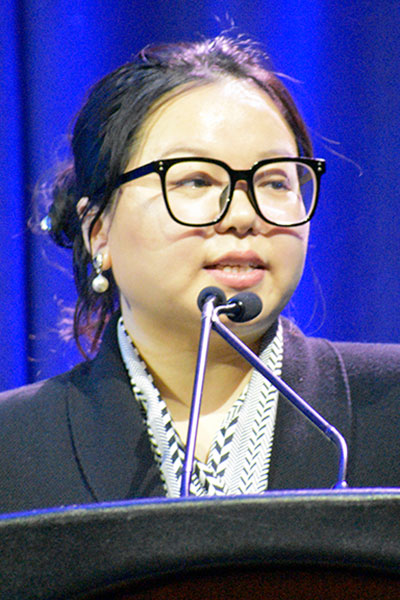
Favorable Outcomes of CAR T-cell Therapy Followed by TCRαβ-Depleted Haploidentical HSCT in Pediatric R/R-ALL
Huaying Liu, MD, pediatric oncologist and associate chief physician at the GoBroad Chunfu Institute of Hematology and Oncology, discussed a novel approach for reducing relapse and improving transplant outcomes in pediatric patients with R/R ALL.
The novel approach applied CAR T-therapy prior to TCRαβ-depleted HLA-haploidentical SCT (haplo-HSCT), which was followed by prophylactic haplo-donor lymphocyte infusion.
Of 65 enrolled patients, 57 with R/R ALL and 8 with R/R T-cell ALL, 55 received CAR T-therapy and achieved MRD-negativity prior to receipt of haplo-HSCT, which has been associated with reduced relapse risk.
In the study, the cumulative relapse rate was 9.5%, suggesting that CAR T-therapy prior to SCT may help improve MRD-negativity rates, thereby reducing relapse risk and improving long-term outcomes.
“TCRαβ-depleted haplo-HSCT can offer long-term remission for pediatric R/R ALL patients with minimal GVHD,” Dr. Liu concluded.
Watch 2026 Tandem Meetings sessions on demand

If you missed a session or wish to review a session from the 2026 Tandem Meetings, you can access on-demand recordings on the Tandem Meetings website. Registered participants have digital access to scientific plenary and concurrent sessions, oral abstract sessions, honorific lectures, symposia and educational tracks.