 Follow ASTCT®

Six authors were selected to present their work on innovations in CAR T engineering and cellular therapies for B-cell malignancies in the Feb. 7 Oral Abstract Session L.
The main highlights of their presentations are provided below. The session can be viewed on demand via the online program by in-person attendees and by those with registered digital access to the 2026 Tandem Meetings | Transplantation & Cellular Therapy Meetings of ASTCT® and CIBMTR®.
Zamtocabtagene Autoleucel (Zamto-Cel), a Tandem CD20-CD19 Directed CAR-T cell Therapy as Second-Line Treatment for relapsed/refractory (r/s) Large B-cell Lymphoma: Primary Analysis of the Randomized, Pivotal DALY 2-EU Study
Pierre Bories, MD, PhD, a hematologist at the Toulouse University Institute of Cancer-Oncopole in France, discussed results from the primary analysis of the DALY 2-EU study.
Zamto-cel is the first CD20-CD19 (directed) CAR T-cell therapy produced using a fully automated system and administered as a fresh, non-cryopreserved formulation.
In the DALY 2-EU study, zamto-cel demonstrated significant and clinically meaningful superiority over R-GemOx in transplant-ineligible patients at high risk for treatment failure with an event-free survival hazard ratio of 0.39.
Zamto-cel showed a manageable safety profile, with only 5% of patients experiencing grade 3 or higher cytokine release syndrome (CRS) and one patient developing grade 3 immune effector cell-associated neurotoxicity syndrome (ICANS).
“Together, the profile of the zamto-cel supports use as a preferred second-line option for patients with relapsed and refractory large B-cell lymphoma and its continuous evaluation for transplantation,” Dr. Bories said.
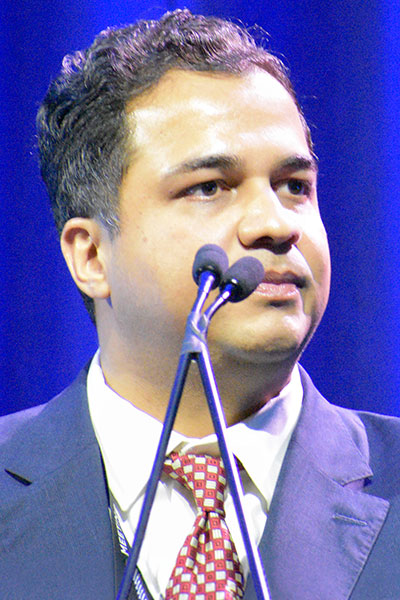
A Phase 1 Study of KITE-753 or KITE-363 in Patients with Relapsed/Refractory B-cell Lymphoma: Initial Safety and Preliminary Efficacy of KITE-753 and Updated Results of KITE-363
Saurabh Dahiya, MD, FACP, an associate professor of medicine and the director of cell therapy at Stanford University School of Medicine, discussed results from the first-in-human study of KITE-753 and KITE-363.
“While CAR T-cell therapies have transformed the treatment paradigm in B-cell lymphomas, there remains a clear opportunity to further enhance curative potential by minimizing toxicity,” Dr. Dahiya said.
KITE-363 and KITE-753 are investigational, bicistronic, CAR T-cell therapies with synergistic signaling designed to prevent antigen escape. The rapid manufacturing process used for KITE-753 preserves more naive T-cells than KITE-363.
In the Phase I trial, KITE-363 dose level 3 demonstrated high overall and complete response rates, durable complete response (CR) rates and a low incidence of high-grade CRS and ICANS. KITE-753 dose level 3 demonstrated a high CR rate of 79% and a safety profile characterized by only low-grade CRS and only two cases of low-grade ICANS.
A pharmacokinetic study revealed that KITE-753 showed pronounced expansion despite a dose that was 10 times lower than KITE-363, highlighting its robust proliferative potential.

Dual Targeted Lentiviral Transduced Anti-CD20/Anti-CD19 (LV20.19) CAR T cells for Relapsed, Refractory CLL
Nirav Shah, MD, a professor at the Medical College of Wisconsin, discussed results from a Phase I/II prospective trial of LV20.19.
LV20.19 CAR T-cells demonstrated significant benefits with 78% of patients achieving a CR or CR with incomplete blood count recovery and a median progression-free survival (PFS) of 32 months.
However, high-grade immune effector cell-associated hemophagocytic lymphohistiocytosis-like syndrome (IEC-HS) toxicities were common. As a result, the dose was reduced (from 2.5×10⁶ cells/kg to 1×10⁶ cells/kg). While the rates of IEC-HS were similar to the lower dose, there were no grade 3 or above IEC-HS toxicities or treatment-related mortality within the first 30 days at the lower dose, and the lower dose change did not impact in vivo expansion or clinical outcomes.
“We’ve learned that the cytokine profile of those patients who develop IEC-HS is unique, and we need to better understand the mechanism of this so we can treat this appropriately,” Dr. Shah said.
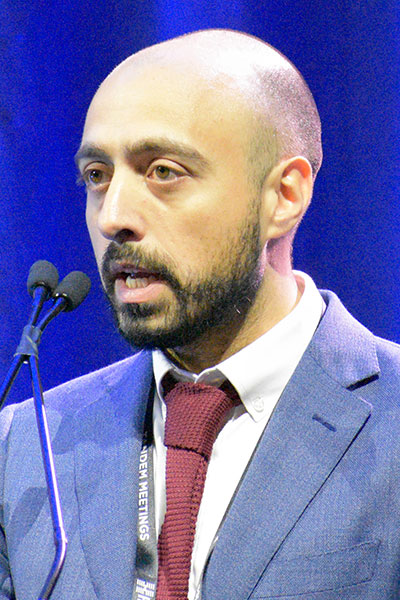
Intratumoral Cellular Therapy with Autologous Activated M1 Sirpα-Low Macrophages in Non-Hodgkin Lymphoma: Clinical Results from a First-In-Human Phase 1 Study
Paolo Strati, MD, an associate professor at the University of Texas MD Anderson Cancer Center, discussed results from the first-in-human Phase I study of RB-1355 macrophages.
Dr. Strati described RB-1355 as “a macrophage-based autologous cellular therapy product based on monocyte-derived macrophages exposed to MACH-1, which is a proprietary macrophage activation system able to increase inflammatory pathways while downregulating inhibitory pathways, including Sirpα, and overall repolarizes macrophages to a more anti-tumoral phenotype,” said Dr. Strati.
Thirteen patients with non-Hodgkin lymphoma (NHL) were administered RB-1355 as monotherapy or in combination with focal external-beam radiotherapy. These patients were heavily pretreated with a median number of prior lines of systemic treatment of 4. RB-1355 was well-tolerated with no dose-limiting toxicities or grade 3-4 treatment-related adverse events.
At a median follow-up of 104 days, two patients with diffuse large B-cell lymphoma (DLBCL) achieved CR, one patient with peripheral t-cell lymphoma achieved partial response, one patient with mycosis fungoides cutaneous T-cell lymphoma (MF-CTCL) achieved partial response and three patients with MF-CTCL achieved stable disease.
Finally, results demonstrate that RB-1355 promotes an immunostimulatory tumor microenvironment and triggers the proliferation of intratumoral T-cells.
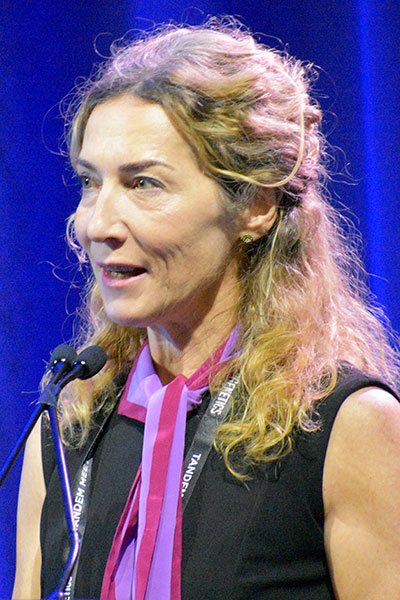
E7777 to Enhance Regulatory T-cell Depletion Prior to Commercial CAR-T19 for High Risk Diffuse Large B-cell Lymphoma (DLBCL): Results of Phase 1 Trial (NCT0485525) 2477 Characters
Veronika Bachanova, MD, PhD, a professor at the University of Minnesota, discussed preliminary results from the Phase I trial of E7777 in DLBCL.
“In DLBCL, the microenvironment is characterized by the presence of regulatory T-cells. Some subtypes have been associated with poor outcomes and poor response to chemotherapy. This led us to hypothesize that perhaps enhancing lymphodepletion with an agent that can particularly target T-regs can be beneficial to improve the efficacy of CAR T-cell therapy,” Dr. Bachanova said.
E7777 targets cells expressing high-affinity Interleukin-2 receptor (IL-2R) complex, which is highly expressed on regulatory T-cells (T-regs). When internalized, E7777 causes cell death. E7777 is already FDA approved for relapsed/refractory stage 1-3 CTCL.
Trial results show that adding IL-2R targeting immunotoxin E7777 to standard lymphodepletion is safe and feasible when combined with CD19-directed CAR T-therapy. Importantly, E7777 caused rapid depletion of blood T-regs. After a median follow-up of 14.1 months, the median progression-free survival was 79%, and the overall survival rate was 86%.
E7777 was generally well tolerated, with transient capillary leak syndrome being the most frequently observed toxicity.

Development of “Auto-Regulating” CD19 CAR T cells Using a Novel Chimeric Inhibitory Receptor
Dustin A. Cobb, PhD, a research scientist at the University of Virginia, discussed the development of auto-regulating CD19 CAR T-cells using a novel chimeric inhibitory receptor (CIR).
“As CARs are increasingly being deployed beyond hematological malignancies, we still need novel strategies to regulate their activity,” Dr. Cobb noted.
Dr. Cobb and his team engineered a self-regulating CD19 CAR T construct with a CIR consisting of an IFNγ binding domain coupled to the inhibitory signaling domain of T-cell immunoreceptor with Ig and ITIM domain (TIGIT).
The system exhibited IFNγ responsiveness, sustained activity and effective cytokine production, preservation of anti-tumor efficacy and persistence, and reduced myeloid cell activation in vitro.
Future directions will include generating new CIR integrations targeting additional toxicity factors, such as interleukin 6 or monocyte chemoattractant protein-1, and incorporating alternative inhibitory signaling domains. Dr. Cobb also expects to see the integration of the safety feature of self-regulation into deployment of CARs for treatment of solid tumors.