 Follow ASTCT®
Graft-versus-host disease (GVHD) is an all-too-familiar complication following allogeneic hematopoietic cell transplantation. Emerging paradigms are already changing GVHD prevention, and new approaches moving from bench toward bedside could lead to even greater transformations.
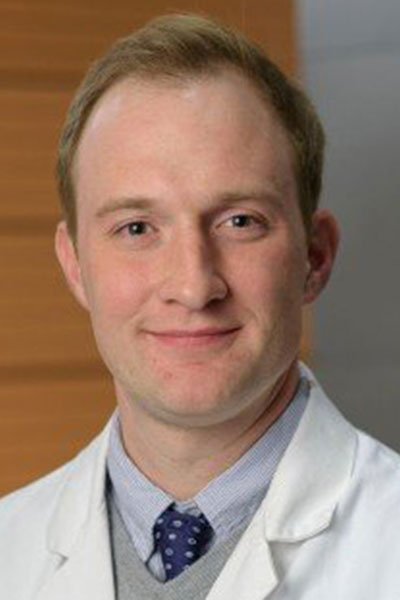
These themes will be explored when Brian Shaffer, MD, moderates the plenary session Innovations in GVHD Prevention: PTCy & Beyond on Thursday, Feb. 5, 5:00 – 6:30 p.m. MST in the Salt Palace Convention Center, Ballroom AB.
Dr. Shaffer, a hematologist at Memorial Sloan Kettering Cancer Center, will open with his presentation on the growing shift in post-transplant cyclophosphamide (PTCy) use to prevent GVHD in a variety of transplant recipients.
“PTCy has taken off in adults,” Dr. Shaffer said. “It’s an old medicine that has become a huge disruptor in how we prevent GVHD and how we approach transplant in patients without matched donors. Recent clinical trials show that many different donor types, both matched and mismatched, seem to respond very well to this approach.”
Dr. Shaffer added that expanding the field of donors provides obvious benefits, but also new challenges.
“The most important thing is that we’ve increased the options for patients,” Dr. Shaffer said. “We’ve made the procedure safer, but now we have a new set of problems that we have to turn our eyes to in the future. If many donors can work, selecting a donor becomes more challenging. New innovations in cyclophosphamide are also emerging. If we lower the dose, does it still work? Does it work in one donor type and not in another type? We are pivoting to the future to think about how to make sense of these new approaches with PTCy.”
Patients’ gastrointestinal (GI) tracts might play a key role in that pivot to the future. Pavan Reddy, MD, professor and director of the Dan L Duncan Comprehensive Cancer Center at Baylor College of Medicine, will explore the latest findings in crosstalk between GI tissue resilience mechanisms and the gut microbiota in GVHD. There are a growing number of studies suggesting that target tissue intrinsic mechanisms in gut microbiota can affect GVHD, but the biological processes that may be involved have yet to be characterized. Nor is it clear if there are cause-and-effect relationships between tissue-specific and microbiota-specific mechanisms in regulating GI GVHDs.
“This will be more about what is going on in the lab and the next generation of understanding ideas and hypotheses,” Dr. Shaffer said. “There is this growing idea that we have a universe of bacteria living in us that define our health status in ways we are still figuring out.”
GVHD is a common complication, but pediatric patients are particularly affected. Many traditional approaches to preventing GVHD have focused on altering the donor immune system, then adding medications to reduce recipient inflammation. A newer approach is to modify the donor product before transplantation to reduce the likelihood of GVHD.
Christopher Dvorak, MD, chief of the Pediatric Allergy, Immunology and Bone Marrow Transplantation Division and medical director of the Pediatric Cellular Therapy Laboratory at the University of California San Francisco Benioff Children’s Hospital, will explore the latest developments in ex vivo T-cell depleted transplantation in children.
“Removing T-cells that are linked with the generation of GVHD works quite well in children,” Dr. Shaffer said. “There are some exciting data in children that suggest this is a particularly efficacious way of managing GVHD in the pediatric population. Graft manipulation and graft engineering are worth considering in that younger population.”
On-demand content will be available for this session. Visit the 2026 Tandem Meetings website to browse the full program listing.
Watch 2026 Tandem Meetings sessions on demand

If you missed a session or wish to review a session from the 2026 Tandem Meetings, you can access on-demand recordings on the Tandem Meetings website. Registered participants have digital access to scientific plenary and concurrent sessions, oral abstract sessions, honorific lectures, symposia and educational tracks.