 Follow ASTCT®
Cellular therapies, including tumor-infiltrating lymphocytes (TILs), T-cell receptor (TCR)-engineered T-cells, chimeric antigen receptor T-cells (CAR Ts), and other engineered immune cells, have the potential to transform the management of cancer and autoimmune diseases.
During the 2026 Tandem Meetings | Transplantation & Cellular Therapy Meetings of ASTCT® and CIBMTR®, experts gathered for a plenary ASTCT/SITC Joint Session on Evolving Landscape of Cellular Therapy: Solid Tumors and Autoimmune Disorders. Speakers explored the scientific rationale, translational challenges and innovative clinical approaches for leveraging cellular therapies in solid tumors and autoimmune diseases. They also highlighted emerging evidence for therapeutic efficacy and safety of cellular therapies in difficult-to-treat solid tumors, including ovarian cancer, neuroblastoma, glioblastoma and sarcoma.
Complex challenges
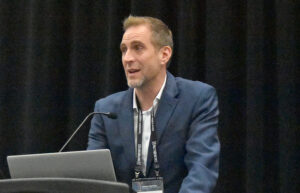
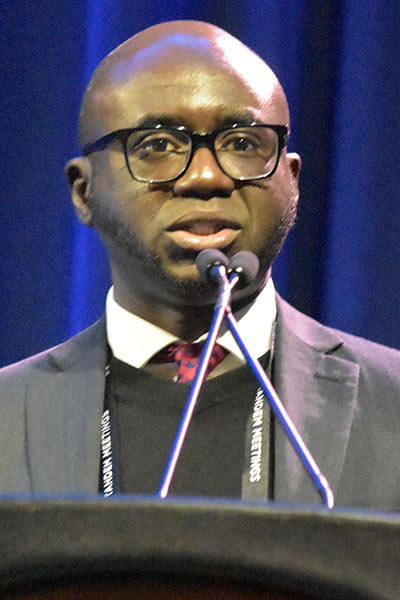
Oladapo Yeku, MD, PhD, FACP, spoke about innovative ways for engineering and deploying cellular therapies to help advance their activity in solid tumor indications.
“The premise overall [underlying the development of cellular therapies for solid tumors] is that we can give this one-time ‘living drug’ to a patient and bypass a lot of the toxicity challenges and issues we have in solid tumors, where patients come in every three weeks, every two weeks, sometimes weekly in the case of gynecologic cancers, for ongoing chemotherapy,” said Dr. Yeku, associate professor of medicine at Harvard Medical School and the director of Translational Research for the Gynecologic Oncology Program at the Mass General Brigham Cancer Institute.
There are many complex challenges with cellular therapy development for solid tumors, Dr. Yeku noted.
The optimal co-stimulatory domain is unknown. The solid tumor microenvironment (TME) is often hostile, hypoxic and/or immunosuppressive, making solid tumors less accessible to penetration by engineered immune cells (which have not yet been developed in the solid tumor space). Lymphodepletion, lack of bridging therapies and significant heterogeneity in antigen expression in solid tumors are additional challenges.
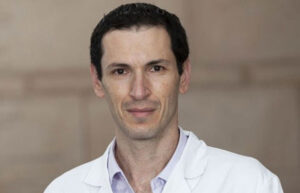
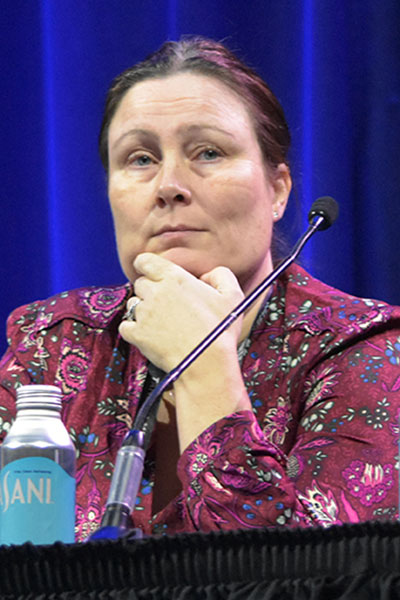
Session co-chair Roisin O’Cearbhaill, MD, noted the significant inter- and intra-tumor heterogeneity of HER2 and its impact on clinical care for breast cancer to illustrate the difficulties with target antigen selection in solid tumors.
Current therapies
Drs. Yeku and O’Cearbhaill reviewed the cellular therapies currently approved in solid tumor indications.
They noted that TILs have demonstrated the proof-of-principle that cellular therapies can be effective in solid tumors. Lifileucel, a tumor-derived autologous T-cell immunotherapy composed of a patient’s own TILs, has been approved for treating patients with unresectable/metastatic melanoma.
A TCR-engineered cell therapy, afamitresgene autoleucel, has been approved for treating patients with synovial sarcoma.
“Definitely that first step has been taken, but there is a lot more work to do so that we can replicate the successes that are being seen in the [hematologic malignancy] world,” said Dr. O’Cearbhaill, an associate professor and medical oncologist at Memorial Sloan Kettering Cancer Center.
Innovative approaches
Dr. Yeku noted that innovative T-cell engineering approaches can help leverage features of solid tumors, conventionally considered to be therapeutic liabilities.
Dysregulated angiogenesis, via disruption of the vascular endothelial growth factor (VEGF) pathway, for instance, is a hallmark of solid tumors and is associated with drug/multidrug resistance and an immunosuppressive TME.
Dr. Yeku discussed preclinical evidence for antitumor efficacy of mesothelin-targeted CAR Ts engineered to secrete a VEGF-targeting single-chain variable fragment. This novel approach enabled VEGF blockade within the TME and potentiated antitumor activity in mouse models of ovarian and lung cancer.
In another example, HER2-directed CAR Ts were engineered to express the CAR only in the context of the hypoxic TME. The hypoxia-potentiated CAR Ts ameliorated the on-target off-tumor toxicities associated with HER2-targeted therapies, without compromising antitumor activity.
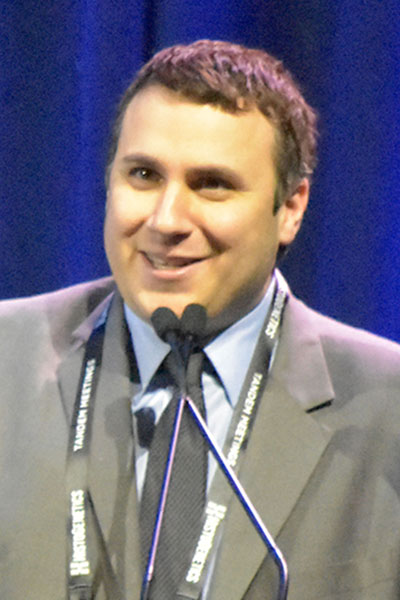
Joseph Fraietta, PhD, assistant professor of microbiology at the University of Pennsylvania, reviewed preliminary clinical efficacy signals for two new innovative CAR T-therapy approaches.
In a Phase I clinical trial of patients with serous epithelial ovarian cancer or unresectable metastatic pancreatic ductal adenocarcinoma, CAR T penetration and persistence at the tumor site was potentiated by preconditioning the TME with an oncolytic virus engineered to express an extracellular matrix-remodeling enzyme. In this small early-phase trial, patients achieved stable disease, and in one case, partial response.
In another early-phase study, manufacturing CAR Ts in the presence of TGF-β generated more stem-like CAR Ts, which demonstrated efficacy in a patient with prostate cancer.
“The solid tumors taught us that the tissues set the rules regarding whether the engineered cells arrive, what they become, and importantly, how long they function,” Dr. Fraietta said, adding that these lessons can be translated into cellular therapies for autoimmune diseases.
Dr. O’Cearbhaill said that as cellular therapies progress and enter clinical practice, it is important to prepare clinicians — not only community and general oncologists, but also surgeons and other providers who treat patients with solid tumors — to deliver collaborative multidisciplinary care and to manage immune-related adverse effects associated with cellular therapies.
Watch 2026 Tandem Meetings sessions on demand

If you missed a session or wish to review a session from the 2026 Tandem Meetings, you can access on-demand recordings on the Tandem Meetings website. Registered participants have digital access to scientific plenary and concurrent sessions, oral abstract sessions, honorific lectures, symposia and educational tracks.