 Follow ASTCT®
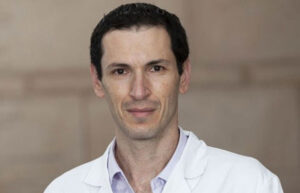
Recipient: Robert S. Negrin, MD, professor of medicine and former chief of the Division of Blood and Marrow Transplantation at Stanford University
Awards Session: Tandem Meetings Awards & Lecture: (ASTCT) Lifetime Achievement Award, Friday, Feb. 6, 5:40 p.m. MST in Ballroom AB (Salt Palace Convention Center)
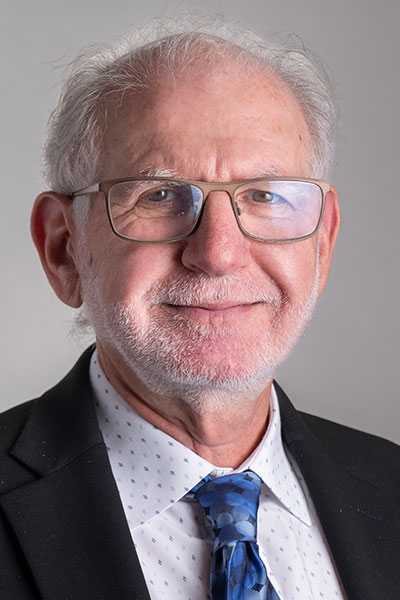
Contributions: The work of Robert S. Negrin, MD, focuses on developing a more fundamental understanding of immune mediated reactions such as graft-versus-host and graft-versus-tumor reactions with a particular interest in immune regulatory mechanisms.
Several concepts developed in Dr. Negrin’s laboratory have been translated to clinical trials. He has published over 300 manuscripts and 44 book chapters. His numerous awards include fellowships from the Damon Runyon Walter Winchell Cancer Fund and the Jose Carreras International Leukemia Foundation. He was a recipient of a Distinguished Clinical Science Award from the Doris Duke Foundation, received the E. Donnall Thomas lectureship from the American Society of Transplantation and Cellular Therapy (ASTCT) and is an elected member of the Association of American Physicians.
Dr. Negrin has served on multiple editorial boards and was an associate editor of Blood and the founding editor in chief at Blood Advances. He has served as the president of the International Society of Cellular Therapy, ASTCT (formerly the American Society of Blood and Marrow Transplantation) and is the current president of the American Society of Hematology.
What does this award mean to you?
“I am beyond thrilled to receive the Lifetime Achievement award from ASTCT, an organization I deeply respect and have had the privilege of being involved in for many years. I am also profoundly honored to be mentioned in the same context as the other awardees, a number of whom are mentors and people I profoundly admire. However, more than anything else, this award highlights the exceptional honor I have had in working with a large number of outstanding trainees from all corners of the globe. Their contributions are an achievement of a lifetime, and I am deeply grateful for the opportunity to work with them. Many are now leading their own programs and contributing in so many ways. As much as I appreciate this individual honor, this award is for them and their exceptional contributions to our field.”
How did you first become interested in the field of transplantation and cellular and gene therapy?
“I initially wanted to be a biochemist and went to graduate school to study how bacteria generate energy. There, I realized that although basic science is of utmost importance, it was not for me. I needed to do something more connected, at least in my mind, to the human condition. Therefore, I went to medical school and, after residency, wanted to find the area of medicine that most intersected with science. To me, at that time, the choice was between infectious diseases or hematology. I had the great fortune to be mentored by giants in the field such as Drs. David Nathan, Stan Schrier and Karl Blume. I liked the way they thought, lived their lives and, most importantly, the passion they had for their field and their patients. I was most fortunate to be at Stanford in the late 1980s when the bone marrow transplantation program was established. I have had enormous luck that everything fell into place after that and I have had the great fortune to have pursued my career in this field, which provides endless new ideas and opportunities to improve outcomes for our patients. I love the collaborative energy, wonderful friendships and talented people in this field.”
What secrets have you learned in balancing the demands of clinical practice, research, scholarship, teaching and mentoring?
“I am not sure they are secrets, but what I have learned is to think deeply about the questions we are addressing and the ways we are pursuing them. Collaborations have been incredibly important to our work to develop some of the technical advances that allow us to pursue studies in a different way. Also, it was important to know when to pivot to a more productive area. I have always run my laboratory in a rather loose, collaborative way, and as such, I never really liked the word ‘mentor’ as it implies hierarchy. I always saw it more as a collaboration filled with give-and-take. On the clinical side, I have learned to make sure I know what I know and ask for help for the things that I do not. Being at a large academic institution, this has always been available. I have learned so much from my patients, about disease, what is important in life and what true grit is all about. I am so appreciative of these interactions that continually shape me and my thinking.”
How do you hope your work will have most influenced the field?
“I hope our work inspires others to build on the ideas we have developed, to go deeper. I always felt that science and medicine are like an onion, and we must continually peel back the layers. I truly hope what we have learned will help our patients overcome this major challenge in their lives in a simpler way. I believe our work on regulatory mechanisms have many potential applications, not just in blood cancers but in other areas of medicine that we are just beginning to think about. I have great expectations about the many people who have come through my laboratory and our program and how they will shape the future. More than anything else, I hope the spirit of collaboration, collegiality and creative thinking will inspire others to go to greater heights.”
What excites you most about the future developments in cellular immunology or in the wider field of transplantation and cellular and gene therapy?
“There are so many possibilities, so many exciting areas. In transplantation, I hope that with simpler and safer approaches, we can move into other areas. For example, to treat patients with a broad range of autoimmune disorders and to induce tolerance to organ transplants — in addition to more effectively treating patients with hematological malignancies. Within the broader cellular and gene therapy fields, we are just cracking the surface; the potential applications are so exciting. But we must maintain the public’s trust and continue to use our resources wisely. Never before have our ideas, institutions and credibility been so challenged — so we must rise to the moment and demonstrate our collective merit. I have no doubt we will do just that.”
The ASTCT Lifetime Achievement Award is presented at each year’s Tandem Meetings. The award recognizes an individual who has made continuing contributions to the field of blood and marrow transplantation, either in basic biology or clinical application. Visit ASTCT’s website to learn more about the award and read a list of past recipients.
Watch 2026 Tandem Meetings sessions on demand

If you missed a session or wish to review a session from the 2026 Tandem Meetings, you can access on-demand recordings on the Tandem Meetings website. Registered participants have digital access to scientific plenary and concurrent sessions, oral abstract sessions, honorific lectures, symposia and educational tracks.