 Follow ASTCT®
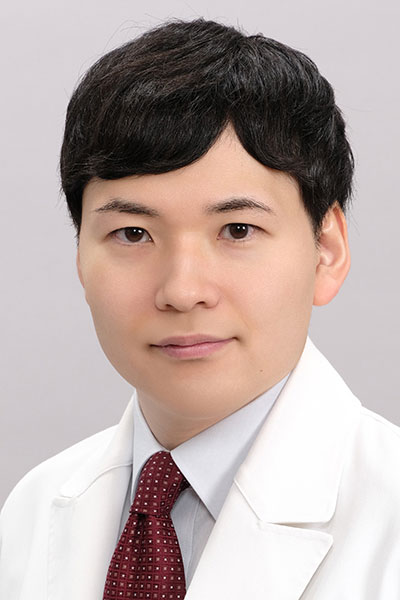
Recipient: Takafumi Tsushima, MD, Department of Hematology and Oncology, Japanese Red Cross Narita Hospital
Awards session: ASTCT Spotlight Session: Best of Transplantation and Cellular Therapy: Selections from the ASTCT Journal and New Investigator Awards, Wednesday, Feb. 4, 1:30 – 3:00 p.m. MST in Room 151 G of the Salt Palace Convention Center
Lecture title: Clinical Outcomes of Early WT1 mRNA Reduction after Remission Induction In Newly Diagnosed Acute Myeloid Leukemia Undergoing Allogeneic Hematopoietic Stem Cell Transplantation
What does this award mean to you?
“I was very honored and happy to receive this wonderful award. I was also very happy to know that our paper had been read by doctors I have great respect for, Professor Robert Korngold, PhD, and Professor David Porter, MD. In December 2024, I was very surprised to learn that my paper had been accepted for publication in Transplantation and Cellular Therapy. I wish to thank the reviewers for their valuable and constructive feedback. A year later, in December 2025, I was deeply moved to learn I had received this award. My family and colleagues were also truly delighted. This was the best early Christmas present I’ve received. Every day, I am acutely aware of both the importance and the difficulty of transplantation. Writing this paper has given me the opportunity to reflect on my own practice.”
What do you plan to talk about in your award lecture?
“First, I’ll talk about the introduction for using WT1 mRNA for AML-MRD. Next, I’ll explain WT1 mRNA measurement methods and their practical use beyond MRD. Finally, I’ll focus on the analysis of the impact of early WT1mRNA reduction following remission induction (particularly allogeneic HSCT for AML).”
How did you first become interested in transplantation and cellular and gene therapy?
“In my third year as a physician, I experienced my first case of AML relapse following chemotherapy. The patient underwent allogeneic hematopoietic stem cell transplantation in non-complete remission with severe pneumonia and no normal hematopoiesis. Three weeks after transplantation, the patient’s condition improved significantly as hematopoiesis began to recover. After discharge, I was deeply moved and truly impressed by seeing the patient repeatedly visit the outpatient department with their children, gradually reintegrating into society. This encounter with hematopoietic stem cell transplantation was the moment I became inspired and decided to pursue this field.”
How do you hope your work influences the field?
“Our research revealed that cases with particularly deep WT1 mRNA reductions after initial remission induction showed significantly improved survival outcomes. We consider it meaningful that the degree of WT1 mRNA reduction following initial remission induction can predict survival. This suggests that the extent to which the leukemia clone is eliminated during the initial remission induction is crucial for treatment strategies aimed at allogeneic transplantation, beyond the conventional use of WT1 mRNA as an MRD marker. It would be an honor if our findings could contribute to improving future clinical allogeneic HSCT practice for AML and enhancing treatment outcomes.”
What excites you most about the future developments in the field of transplantation and cellular and gene therapy?
“Japan is experiencing rapid population aging. I hope that transplantation and cellular therapy can be performed more safely with lower relapse rates in cases involving older patients. However, I also believe it is desirable to perform these procedures based on more accurate prognosis estimates. Recently, our hospital has also begun using CAR-T cell therapy and bispecific antibodies, particularly for malignant lymphoma. We have seen the great effectiveness of these novel agent treatments and hope that their use will expand to more areas beyond malignant lymphoma and multiple myeloma, reducing the need for transplantation and saving more relapse/refractory patients.”
The George Santos Award is presented annually at the Tandem Meetings | Transplantation and Cellular Therapy of Meetings of ASTCT® and CIBMTR®. Visit the ASTCT website to learn more about this and other ASTCT award recognitions.
Watch 2026 Tandem Meetings sessions on demand

If you missed a session or wish to review a session from the 2026 Tandem Meetings, you can access on-demand recordings on the Tandem Meetings website. Registered participants have digital access to scientific plenary and concurrent sessions, oral abstract sessions, honorific lectures, symposia and educational tracks.