 Follow ASTCT®
Parvez Ahmed, MBBS, FCPS, will receive the CIBMTR Distinguished Service Award during the 2026 Tandem Meetings | Transplantation & Cellular Therapy Meetings of ASTCT® and CIBMTR®. The recognition honors Dr. Ahmed’s extensive accomplishments, most notably pioneering and developing the field of clinical hematology and bone marrow transplantation (BMT) in Pakistan.
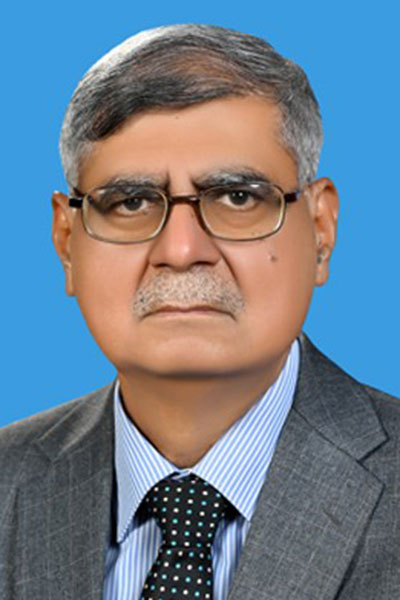
Dr. Ahmed, who is also a retired major general and served as medical director of the Armed Forces Bone Marrow Transplant Centre (AFBMTC), played an instrumental role in establishing four blood marrow transplant facilities (three of which are registered with and are in good standing with CIBMTR), is a former president of the Pakistan Society of Hematology and serves as the founding president and patron-in-chief of the Pakistan Blood and Marrow Transplant (PBMT) group.
He will be honored in a ceremony on Friday, Feb. 6, at 5:00 p.m. MST in Ballroom AB of the Salt Palace Convention Center.
Dr. Ahmed’s centers contribute transplant data to international registries run by the Worldwide Network for Blood and Marrow Transplantation (WBMT) and CIBMTR, and they collaborate with regional organizations in the Asia-Pacific region (APBMT), in Europe (EBMT) and in the East Mediterranean region (EMBMT).
“We are contributing, and we are in collaboration,” Dr. Ahmed said, noting that these global partnerships allow all members to learn from one another. He said that centers in highly developed areas share techniques and data from more advanced treatment modalities, while centers in resource-limited countries share clinical experience and data for conditions they commonly treat, such as thalassemia and aplastic anemia.
In his daily work, Dr. Ahmed combines this global perspective with an advocacy for his patients and his nation’s medical students. He serves in multiple positions, including as a hematologist and the director of blood marrow transplantation at Quaid-e-Azam International Hospital in Islamabad, as the medical director of PATHWEL Center of Hematology and BMT in Rawalpindi and as a visiting consultant in the Department of Hematology & BMT at Pir Abdul Qadir Shar Jeelani Institute of Medical Sciences in Gambat.
Dr. Ahmed said he is grateful to multiple people for supporting his career in medicine. This includes his parents and teachers who encouraged a young student to imagine himself in a profession greatly underrepresented in his remote, rural district of the Punjab province.
“Doctors were a rare commodity,” Dr. Ahmed explained. “Even the district hospitals had only four or five doctors, and no specialists.”
Joining the medical corps of his nation’s armed forces, Dr. Ahmed pursued post-graduate qualification in hematology and in the mid-1990s found himself as part of the military’s effort to create the nation’s first BMT centers.
The military sent him to St. George’s Hospital in London for additional studies and training in BMT and clinical hematology.
“London was a dream,” Dr. Ahmed recalled. “I was fascinated by the field and by the facilities that were set up there, and I wondered whether I would ever be able to work in such a facility in our country. By the time I left, I was committed to helping develop this in my own country.”
In 2001, Dr. Ahmed was part of the team that opened the AFBMTC in Rawalpindi, a major urban center and twin city to the capital of Islamabad. He continued developing the armed forces network of transplant centers until his military retirement in 2017. After this, he played key roles in establishing and developing a series of civilian transplant centers, both private and public.
As an administrator, practicing clinician and educator, Dr. Ahmed advocates for educational opportunities for his students, both abroad and in Pakistan. He has helped initiate a fellowship program in clinical hematology through the College of Physicians and Surgeons of Pakistan and has worked to establish programs for hands-on training in BMT.
Dr. Ahmed recalled how one of his key mentors, Muhammad Salim, MBBS, FRCPath, would almost always reply to questions by saying: “I don’t know. Look at the literature, and if you find the answer, then come to me and tell me.”
Dr. Ahmed adopts this approach in his mentoring, believing a comprehensive, self-reliant approach to clinical care will benefit his students, many of whom will go on to build a new transplant center from scratch, which will require recruiting, training and developing their own clinical support staff while taking on other essential tasks.
“Being a transplant physician here requires some additional training and experience. We look after the administration and the infrastructure, secure medications and even monitor the air quality and the infection control,” Dr. Ahmed explained. “These are major challenges, but at the same time, these are opportunities. This experience teaches you to innovate and gives you confidence that you can establish a BMT center anywhere.”
Dr. Ahmed’s career reflects this multi-skilled approach to providing patient care. He continues to conduct research, mentor, raise funds, monitor transplant quality, meet with community groups and negotiate purchases of needed infrastructure. He described the CIBMTR Distinguished Service Award as a recognition for all these roles he has played during his life.
But he also said that he sees the award as an accomplishment for the places he has worked, the people he has worked with and for his country, which continues to improve upon a network of transplant centers.
“It’s representation at an international forum,” Dr. Ahmed said. “That is a great honor and a great achievement for us.”
On-demand content will be available for this award presentation. Visit the 2026 Tandem Meetings website to browse the full program listing.
Watch 2026 Tandem Meetings sessions on demand

If you missed a session or wish to review a session from the 2026 Tandem Meetings, you can access on-demand recordings on the Tandem Meetings website. Registered participants have digital access to scientific plenary and concurrent sessions, oral abstract sessions, honorific lectures, symposia and educational tracks.