 Follow ASTCT®
A joint plenary session of ASTCT, CIBMTR and EBMT kicked off the first day of the 2026 Tandem Meetings | Transplantation & Cellular Therapy Meetings of ASTCT® and CIBMTR® on Feb. 4 in Salt Lake City. The session, From Breakthrough to Bedside: Navigating the Surging Transplant and Cell Therapy Landscape, provided a long-range view of the landscape of hematopoietic stem cell transplantation (HCT) and cell and gene therapies, with a focus on the challenges, opportunities and solutions around treatment access and care delivery.
Trends and Challenges in Transplant and Cell Therapy: Preparing for a Rapidly Emerging Future
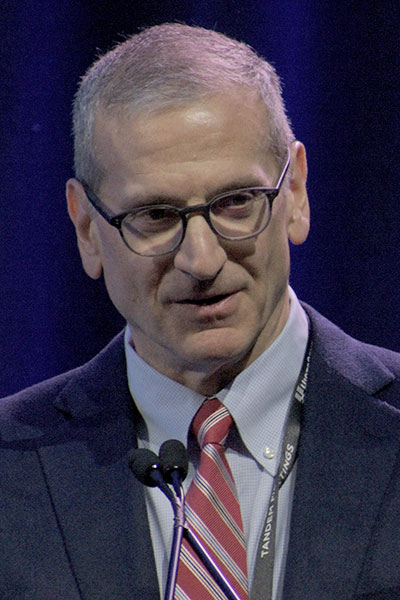
Jeffery J. Auletta, MD, professor of pediatrics at The Ohio State University College of Medicine and the chief scientific director of CIBMTR, reviewed the changing topography of cell and gene therapies. While there has been an overall decrease in use of HCTs and an uptake in use of CAR T therapies, allogeneic HCT is being used more often and in more diverse populations through the expansion of alternative donor platforms, post-transplant cyclophosphamide and mismatched unrelated donor transplants.
He also noted the use of CAR T-cell infusions has grown over the past five years and that gene therapies have higher penetration in non-malignant diseases, such as autoimmune diseases, with a higher prevalence in the pediatric population.
“Currently, there are 144 approved cell therapies, gene therapies and RNA therapies,” Dr. Auletta said. “The future state is incredible; in the pipeline, there are over 4,300 therapies, 929 non–gene-modified cell therapies and over 2,000 gene therapies.”
But Dr. Auletta also noted challenges ahead: access, expansion of disease indications and improved real-world data collection. He also noted social determinants of health as a key driver of access disparities.
“The challenge is that ethnically diverse patients are underrepresented in terms of access, but are overrepresented in terms of adverse social determinants of health,” Dr. Auletta said. “To really get access, we need health equity and engagement.”

Unequal Access of European Citizens to CART Therapy. Should We be Part of the Solution?
Alvaro Urbano-Ispizua, MD, PhD, outlined the rise of CAR T-therapies in Europe and challenges the region faces in achieving equitable access.
“If we look at the EBMT registry, the increase in CAR T activity is remarkable, with close to 5,000 patients treated in Europe in 2023, and a total of 14,000 patients treated [with CAR T-therapies] between 2019 and 2023,” said Dr. Urbano-Ispizua, a senior consultant in hematology and director of the Department of Medicine at the University of Barcelona. “Unfortunately, the access for European citizens to a commercial CAR-T therapy depends on the postal code.”
To address these access barriers, Dr. Urbano-Ispizua and colleagues have established an academic, accessible CAR T program in Spain that has treated over 630 patients to date. The program has targeted CD19 for B-cell acute lymphoblastic leukemia (ALL)/non-Hodgkin lymphoma (NHL); B-cell maturation antigen (BCMA) for multiple myeloma, plasma cell leukemia and AL amyloidosis; CD19 and BCMA for B-cell NHL; and CD7 for CD7+ acute myeloid leukemia and T-cell ALL.
Dr. Urbano-Ispizua noted that regulatory and legal frameworks complicate the program’s expansion across Europe, but he believes the program has shown a possible way forward by tapping collaboration among academic institutions, health authorities and regulators.
Implications of Success Addressing Access and Unmet Need on Program and Work Force Development and Patient Care Models
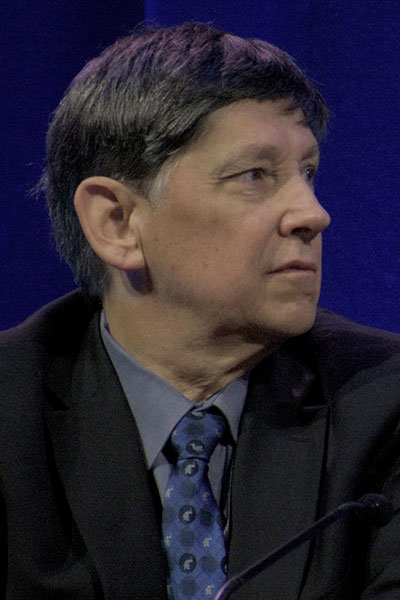
Richard Maziarz, MD, professor of medicine at Oregon Health and Science University, addressed themes of care delivery and workforce development, population demand and access, alternate delivery models, partners for change and solutions for the future of cell and gene therapies.
Dr. Maziarz underscored the unmet need for the US healthcare workforce, with a predicted deficiency exceeding 20% by 2030. The deficits are likely to be exacerbated by recent changes in national policies, he added.
Despite this anticipated deficiency, there is cause for optimism.
“We have worried about this before,” Dr. Maziarz said, alluding to the anticipated shortage in the HCT workforce in the early 2010s and to the role of multi-stakeholder initiatives in addressing provider deficits.
Dr. Maziarz pointed to examples of emerging decentralized delivery approaches and new workforce training solutions — such as simulation laboratories and early introduction of clinical and basic cell therapy training — as promising examples of solutions to an adequate future workforce.
He noted that the future of cell and gene therapy depends on collaboration between a wide range of stakeholders and partners, including regulatory agencies and medical professional societies.
Watch 2026 Tandem Meetings sessions on demand

If you missed a session or wish to review a session from the 2026 Tandem Meetings, you can access on-demand recordings on the Tandem Meetings website. Registered participants have digital access to scientific plenary and concurrent sessions, oral abstract sessions, honorific lectures, symposia and educational tracks.