 Follow ASTCT®
Four authors were selected to present their work in the Feb. 7 Late Breaking Abstracts session.
Summaries of their presentations appear below. The session can be viewed on demand via the online program by in-person attendees and by those with registered digital access to the 2026 Tandem Meetings | Transplantation & Cellular Therapy Meetings of ASTCT®and CIBMTR®.
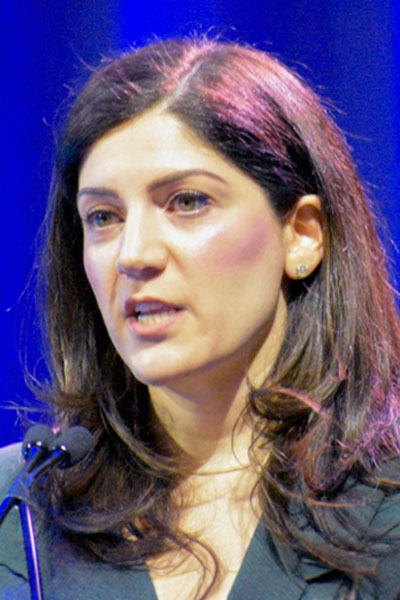
Phase I Study of CD19-ARTEMIS® T Cells (EB103) in Patients with Aggressive B-Cell Non-Hodgkin Lymphoma
Naseem Esteghamat, MD, MS, assistant professor at UC Davis Comprehensive Cancer Center, discussed results from STARLIGHT-1, a Phase I study of CD19-ARTEMIS T-cells (EB103) in patients with aggressive B-cell non-Hodgkin lymphoma (NHL).
The molecular features of ARTEMIS CAR T-cells result in a reduced risk of constitutive signaling, more regulated cytokine production and an improved safety profile.
The dose escalation phase of STARLIGHT-1 included two dose levels. The primary endpoints were the type, frequency and severity of adverse events (AEs) and laboratory abnormalities, and the recommended Phase II dose (RP2D), based on the maximum tolerated dose (MTD) and manufacturing capability.
Results demonstrated that EB103 had a favorable safety profile in patients with aggressive B-cell NHL, including one patient with primary central nervous system lymphoma (PCNSL). There were no grade ≥3 cytokine release syndrome (CRS) events, and there was one grade 3 immune effector cell-associated neurotoxicity syndrome (ICANS) event that improved to grade 1 within three days.
“In all subjects, the overall response rate (ORR) was 88% with a complete response (CR) rate of 75%. In dose level 2, the ORR and CR rates were both 100%. All subjects who achieved CR remain in CR at the time of data cutoff,” said Dr. Esteghamat.
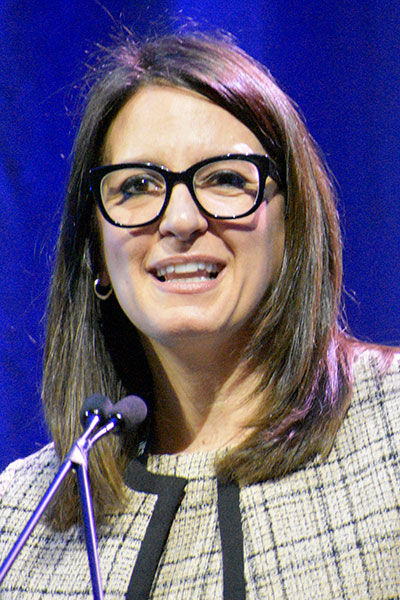
CB-011, an Allogeneic Anti-BCMA CAR T cell Therapy with Immune Cloaking, for Patients with relapsed/refractory Multiple Myeloma (r/r MM): Dose Escalation Results from the CaMMouflage Phase 1 Trial
Adriana Rossi, MD, an assistant professor at the Icahn School of Medicine at Mount Sinai, discussed the dose-escalation results from the CaMMouflage Phase I trial, which explores the effect of CB-011, the first allogeneic anti-B-cell maturation antigen (BCMA) CAR T-cell therapy with immune cloaking.
“Auto CAR Ts are incredible therapies and have changed the landscape of myeloma. However, only 1 in 10 eligible patients will actually receive an auto CAR T. Furthermore, it takes weeks to months to manufacture, and at the end of the day, we get a single dose per match. With CB-011, we will potentially reach many more patients by getting over these access challenges,” Dr. Rossi said.
The CaMMouflage Phase I trial enrolled patients who had received at least three prior lines of therapy, including a proteasome inhibitor, an immunomodulatory drug and an anti-CD38 monoclonal antibody.
Results demonstrated deep, durable responses with CB-011 in heavily pre-treated r/r MM patients. With the recommended dose for expansion of 450M CAR T-cells, patients achieved an ORR of 92%, a stringent complete response (sCR) of 75% and a 91% minimal residual disease (MRD) negativity at ≥6 months. The longest responder remains in sCR with sustained MRD negativity beyond 21 months.
CB-011 had a manageable safety profile observed with no graft-versus-host disease (GVHD), colitis or Parkinsonism. Further, rapid hematologic and immunologic recovery was observed after CB-011 infusion.

Pritelivir Demonstrated Superior Efficacy Compared to Investigator’s Choice Treatment for Refractory Herpes Simplex Virus (HSV) Infections in Immunocompromised Patients: PRIOH-1, Phase 3 Safety and Efficacy
Genovefa Papanicolaou, MBBS, clinical director at Memorial Sloan Kettering Cancer Center and professor at Weill Cornell Medicine, discussed top-line results from the Phase III PRIOH-1 trial of pritelivir for the treatment of refractory HSV in immunocompromised patients.
“Pritelivir is a novel helicase primase inhibitor that retains activity against nucleoside analog- and foscarnet-resistant HSV strains,” Dr. Papanicolaou said.
The efficacy and safety of pritelivir were compared with investigator’s choice (ICT) in the Phase III PRIOH-1 trial. The trial met the primary endpoint of complete lesion healing up to 28 days of treatment, demonstrating statistically superior efficacy compared with ICT in immunocompromised patients with r/r HSV infection
Results demonstrated that pritelivir had a favorable safety and tolerability profile compared to ICT, which is limited by toxicity and administration burden. Further, discontinuation rates and drug-related treatment emergent adverse events were higher for ICT than for pritelivir-treated patients
Results indicate that pritelivir is a promising oral agent to address the significant unmet need in the treatment of acyclovir (ACV) r/r HSV infections in immunocompromised patients.

Intravenous Brincidofovir Effectively Reduces CMV Dnaemia In Antiviral Experienced Immunocompromised Patients: Results of a Phase 2a Clinical Trial
Fareed Khawaja, MBBS, infectious disease physician at MD Anderson Cancer Center, discussed preliminary data on intravenous (IV) delivery of brincidofovir (BCV), a lipid conjugate of the nucleotide analog cidofovir that has demonstrated broad antiviral activity, in the prevention and treatment of cytomegalovirus (CMV).
Dr. Khawaja noted that CMV remains a major cause of morbidity and mortality among immunocompromised individuals.
“The choices for CMV treatment are often poor and associated with great toxicity, specifically nephrotoxicity and myelotoxicity, and these two issues can definitely affect our patient outcomes in stem cell transplant. A lot of us are looking for safer alternatives to treat these patients specifically as a first-line agent for clinically significant CMV infection, specifically in the immunocompromised and frail populations,” Dr. Khawaja said.
Despite its well-established efficacy, oral BCV is associated with increased gastrointestinal (GI) toxicity. However, IV BCV may have less GI toxicity.
A Phase IIa clinical trial assessed the safety and tolerability of three different doses of IV BCV over eight weeks in patients with CMV. Results demonstrated that IV BCV was effective in reducing CMV viremia. It was also reasonably well tolerated in pre-treated immunocompromised patients. These results indicate that IV BCV may be a viable treatment option for patients with limited treatment options.
Watch 2026 Tandem Meetings sessions on demand

If you missed a session or wish to review a session from the 2026 Tandem Meetings, you can access on-demand recordings on the Tandem Meetings website. Registered participants have digital access to scientific plenary and concurrent sessions, oral abstract sessions, honorific lectures, symposia and educational tracks.