 Follow ASTCT®
Almost half a century after briefly working with the man known as the father of bone marrow transplantation (BMT), James Ferrara, MD, DSc, is receiving an award named in honor of the Nobel Prize winner and will deliver the E. Donnall Thomas Lecture at the 2026 Tandem Meetings.
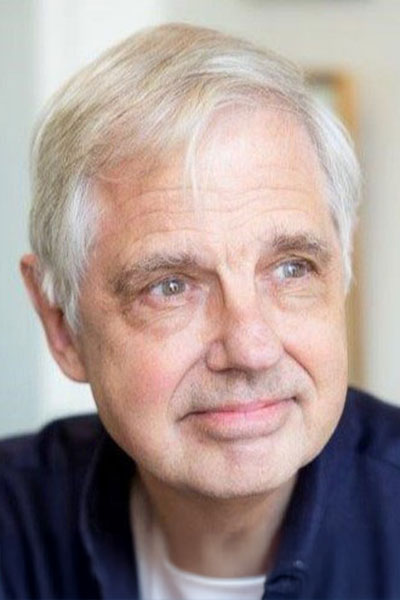
“I actually met Dr. Thomas 45 years ago when I was thinking of getting into transplantation. I went to Seattle and spent a month there as a visiting fellow, and it was very inspiring,” Dr. Ferrara said of the experience as a pediatric resident which led to his meeting E. Donnall Thomas, MD. “That was before he won the Nobel Prize, and it really solidified my career choice.”
The ASTCT E. Donnall Thomas Award recognizes an eminent physician or scientist, either a clinician or an investigator, who has contributed meritoriously to the advancement of knowledge in BMT. Its namesake won the Nobel Prize in Physiology or Medicine in 1990 for his work in BMT to cure leukemia and other blood cancers.
Dr. Ferrara, the Ward-Coleman professor of cancer medicine and director the Center for Translational Research in Hematologic Malignancies at the Icahn School of Medicine at Mount Sinai in New York City, founded the Mount Sinai Acute GVHD International Consortium (MAGIC), establishing a multicenter database and biorepository that has identified and validated biomarkers capable of guiding graft-versus-host disease (GVHD) therapy. His groundbreaking mechanistic studies have illuminated unexpected interactions between the innate and adaptive immune systems and have led to conceptual breakthroughs and the discovery of novel therapeutic targets in order to make BMT safer and more effective for all patients.
The immunology of allogeneic BMT and its major complication, GVHD, will be the focus of Dr. Ferrara’s lecture, GVHD in HD, at 5:50 p.m. MST on Friday, Feb. 6, in Ballroom AB of the Salt Palace Convention Center.
“Acute GVHD is still a problem. Although it’s less of a problem, we’re still treating it, for the most part, the way we treated it 40 or 50 years ago,” Dr. Ferrara noted. “But the treatment, which is high-dose systemic steroids, is bad for our patients. I’ll be presenting some data about how to think about this and what some alternatives might be in terms of new treatment approaches.”
Specifically, Dr. Ferrara will discuss advances in the diagnosis and risk stratification of GVHD using a combination of clinical symptoms and serum biomarkers that have improved outcome prediction.
“I hope that people will understand how they can use this new information, particularly the biomarkers, to guide the therapy for their patients so that it’s more effective and less toxic,” Dr. Ferrara said. “Cellular therapy is still evolving. BMT is perhaps the oldest successful form, but now we have other great therapies like CAR T cells. It’s a very exciting time. Our field 10 years from now is likely to be very different than it is today, so the need to study our patients both individually and collectively through clinical trials and through basic science models is more important than ever.”
Dr. Ferrara is also the 2026 recipient of the Lifetime Achievement Award for the Pediatric Track at the Tandem Meetings. He will deliver that award lecture at 1:05 p.m. MST on Thursday, Feb. 5, in Room 155 A-G.
As a young investigator, Dr. Ferrara was inspired by a pair of physicians and Harvard University professors at Boston Children’s Hospital. While listening to their weekly conversations about the complications their young cancer patients were experiencing, Dr. Ferrara had an elucidating realization.
“They didn’t know why the problems were occurring. I thought, ‘This is biology that I don’t understand, but they don’t understand it either, so maybe we can all learn something together,’” Dr. Ferrara recalled. And when one of the professors, David G. Nathan, MD, now president emeritus at the Dana-Farber Cancer Institute, suggested the answers would come from immunology, Dr. Ferrara turned his attention in that direction.
“These were days when immunology was in its infancy. We didn’t know a lot about lymphocytes or their function,” he said.
But he persevered and applied his growing immunologic knowledge to the problem of GVHD.
“That’s something I was really passionate about because as a pediatric oncologist, we were improving our treatment of children with cancer,” he said. “Every year, you could see the survival curves improve, but this was very early days in transplantation. I wanted to do in transplant what we were doing in the rest of pediatric oncology.”
At the outset, BMT was a pediatric therapy, and Dr. Ferrara made key contributions in its expansion to older populations.
“In those days, we couldn’t do it in older patients. As we learned more about GVHD and the toxicities and the way we prepare patients for transplant, we were able to perform transplants in older and older patients,” he explained. “So, I feel like I matured together with the field and was delighted to be able to contribute.”
When he looks back on his career, Dr. Ferrara credits those who have worked alongside him for helping him continually learn and advance in his scientific pursuits.
“It’s been one of the greatest joys of my professional life to mentor young investigators,” he said. “We sometimes say that we stand on the shoulders of giants, and usually when people say that, they’re thinking about people in the past. But I think we also stand shoulder to shoulder with young giants who are our mentees, who actually perform the experiments and bring new energy and ideas to the field. I wouldn’t be here without the great people that I’ve had the good fortune to collaborate with and to mentor over the past four decades.”
On-demand content will be available for this award lecture. Visit the 2026 Tandem Meetings website to browse the full program listing.