 Follow ASTCT®
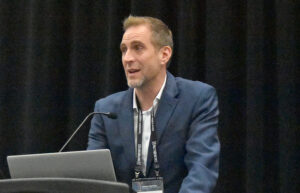
The next advances in cell therapy are likely to come in combinational therapies, engineered cells that are both smarter and safer, off-the-shelf allogeneic cells and in vivo cell programming, said Stephen Gottschalk, MD, at the 2026 Tandem Meetings | Transplantation & Cellular Therapy Meetings of ASTCT® and CIBMTR®.
Dr. Gottschalk’s predictions were part of his Feb. 5 APP Track session, Future of Cell Therapy, in which he guided the audience through a history of cell therapy and defined some of the field’s key moments. Registered attendees and those with digital access can view the entire session on demand through the online program.
How we got here
The timeline of cell therapy is bookended by two major events, said Dr. Gottschalk, the chair of the Department of Bone Marrow Transplantation and Cellular Therapy at St. Jude Children’s Research Hospital. At one end of the timeline is the 1957 advent of blood marrow transplant (BMT) following radiation treatments. On the other end is the 2017 FDA approval of CD19-CAR T-therapy, which led to the approval of tumor-infiltrating lymphocyte (TIL) therapies and the approval of T-cell receptor (TCR) therapies in just seven years.
Between these two major events were three significant strands of development.
In the 1970s to the late-1990s, transplanters pioneered the use of different stem cell sources, such as matched unrelated donor (MUD), cord and haploidentical transplantations.
From the early 1980s to 2010, transplanters started immune reconstitution, first with donor lymphocyte infusions (DLIs), then virus-specific T-cells for prophylaxis and treatment of transfer complications and more recently tumor-associated antigen-specific T-cells (TAA Ts) and natural killer (NK) cells to prevent relapse.
And finally, beginning in 1987 with the introduction of the concept of chimeric T-cell receptors (TCRs), several developments emerged in genetically modified cells, including the 1993 generation of the first recognized chimeric antigen receptor (CAR) and up to the introduction of CD-19 NK cells around 2020.
CAR T dominance
Dr. Gottschalk pointed to several reasons why CAR T-therapy has become such a dominant immune cell product in the past years, including its simple design, straightforward manufacturing process, and its ability to be a one-size-fits-all therapy requiring neither an antigen to be expressed nor a human leukocyte antigen (HLA) match, meaning it is HLA-independent.
He added that the efficacy of CAR T-therapy is also a vital factor, pointing to studies showing its results in treating lymphoma, myeloma and pediatric cases of acute lymphoblastic leukemia (ALL).
Sourcing the number of autologous hematopoietic cell transplantation (HCT), allogeneic HCT and CAR T-therapies recorded each year in the CIBMTR database, Dr. Gottschalk noted that the number of CAR T-therapies had reached half the number of autologous HCT therapies by 2023. “I am sure that very soon, more CAR T-therapies will be infused than allogeneic transplants in the United States,” he said.
Dr. Gottschalk noted that the success of CAR T does come with the cost of toxicities, but interestingly as CAR T-therapy begins to be applied to specific auto-immune diseases, researchers are finding dramatic responses with considerably lower and less-intense side effects than in treatments of malignant diseases.
Future of CAR T
Dr. Gottschalk outlined his expectations for what to expect in CAR T-therapy, noting differences based on the type of disease being treated.
For example, in treating B-cell lineage diseases, Dr. Gottschalk anticipates near-future progress in FDA-approved auto CAR Ts based on combinational therapies and the ability to apply CAR T-therapy earlier in diagnosis settings and with mitigated toxicities. Further in the future, Dr. Gottschalk expects to see the design and application of novel auto CAR Ts with increased persistency and decreased toxicity, as well as the improvement and use of other cell products such as CAR NK cells. Eventually, in vivo CAR T-therapy is likely to replace ex vivo manufacturing, but significant barriers remain, particularly in malignancies such as leukemia that require long-term persistence not currently present with in vivo CAR T-therapy.
Dr. Gottschalk detailed how CAR T-therapy faces similar and unique opportunities and challenges in the treatment of other diseases such as T-cell acute lymphoblastic leukemia (T-ALL), acute myeloid leukemia (AML) and solid tumors, as well as being applied in pediatric care.
In some cases, such as AML, CAR T-therapy has had limited success, but Dr. Gottschalk noted that recent studies where CAR T-therapy has shown an impact on patients with AML raise the possibility that the solution might be in a better understanding of biology, in what drives response in some patients but not in others.
All CAR T-therapies present challenges, which include high manufacturing costs, limited manufacturing and scalability, equitable access and disparities in global regulations and infrastructures. But even with these factors, Dr. Gottschalk noted immense possibilities offered through combinational therapies, engineered cells that are both smarter and safer, off-the-shelf allogeneic cells and in vivo cell programming.
In fact, given these opportunities, one of the biggest challenges researchers face in directing the future of CAR T-therapy is having too many possibilities to pursue.