 Follow ASTCT®
The biologic-physiologic changes that can occur post-transplant often manifest as pulmonary conditions such as lung complications, which remain a major cause of morbidity and mortality for transplant populations. At Lung Complications after HCT, a Feb. 4 concurrent session, pulmonary and critical care experts will provide an overview of early- and late-stage lung complications and introduce cutting-edge research that explores themes relevant to the hematopoietic cell transplant (HCT) community.
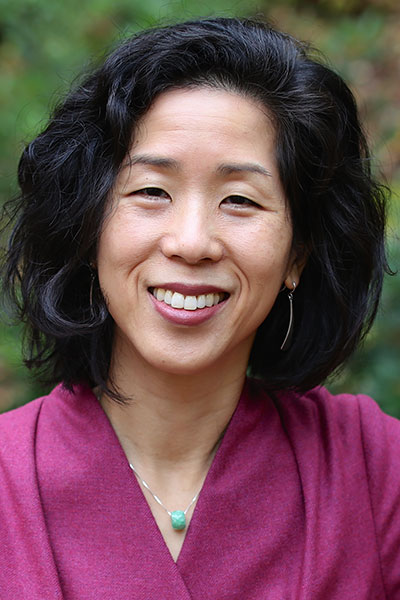
Session Chair Guang-Shing Cheng, MD, a pulmonologist at Fred Hutch Cancer Center and professor of medicine at the University of Washington, said this cross-disciplinary session also provides an opportunity to facilitate essential collaboration of care between lung doctors, critical care doctors, hematologist transplant doctors and the teams that care for vulnerable patients.
The session will take place 10:30 – 12:00 MST in Ballroom J of the Salt Palace Convention Center.
The first speaker, Louise Bondeelle, MD, PhD, pulmonologist and physician-scientist at the University of Geneva, Switzerland, will present Lung Epithelial Injury and Response to Viral Infection in the Early Pathogenesis of BOS. Dr. Bondeelle, who has worked extensively with transplant patients, will draw on her research with basic/translational human cell models to dissect the pathogenesis of airways disease after HCT. Given that respiratory viruses are strongly associated with bronchiolitis obliterans syndrome (BOS) development, her laboratory assessed epithelial responses to viral exposure using ex vivo human epithelial cells from HCT recipients.
Dr. Cheng explained that Dr. Bondeelle’s research themes provide crucial understanding about pathogenesis and carry potential applications for lung injury relevant to HCT as well as solid organ transplant.
“We think there are certain types of respiratory viruses that can be a trigger for the development of BOS, which is a form of lung graft-versus-host disease (GVHD), and there is some recent epidemiologic evidence that supports this,” Dr. Cheng said. “So, clinically speaking, this is important for early detection or prevention practices, as well as for justifying vaccinations or more intensive monitoring.”
The session’s second speaker, Matt Zinter, MD, will present his novel translational work in his presentation, Pulmonary, Blood, and Nasal Transcriptomes in Children with Post-HCT Lung Injury.
Dr. Zinter, program director of pediatric immunocompromised critical care at UCSF Benioff Children’s Hospitals, has been creating transcriptional profiles of patients with lung injury, and comparing differences between blood, lung and nasal samples.
“He’s been able to delineate the microbiome signatures and found that the transcriptomic signatures in the lung — for example, dysbiosis — are different than in the circulation,” Dr. Cheng said. “This highlights the importance of early evaluation with bronchoscopy.”
Dr. Cheng’s presentation, Is It GVHD or Not GVHD? Late-Onset Non-BOS Lung Disease, will take a clinical focus and draw partly on her work leading the Lung GVHD Consortium. She will provide an overview of non-BOS forms of late-onset chronic lung disease, organizing pneumonia and other forms of interstitial lung disease, such as pleuroparenchymal fibroelastosis (PPFE).
“There’s debate about whether these clinical entities represent GVHD. Right now, they’re not included in the National Institutes of Health (NIH) definition. Some are steroid-responsive, some are not. We have a few studies that suggest an association, but it’s an area of active investigation,” Dr. Cheng said. “My presentation will provide clinical suggestions as to how to recognize these and posit how we can more clearly delineate what they are. If these entities are considered part of GVHD, then these patients would be eligible for GVHD clinical trials.”
The session will conclude with an open discussion on real-life case studies representing common themes for all lung complications — or challenging grey areas around them.
Dr. Cheng said she included these presentations and the case study section because they represent research questions and expand upon current knowledge. Improvements in understanding these lung complications have direct implications for improving survivorship of transplant patients.
“We have a real need for rigorous science to better understand the pathogenesis and the development of these complications,” Dr. Cheng said. “There are still many avenues for research regarding lung conditions with the goal of improving people’s outcomes after transplant. After all, people still die from lung disease. They have a transplant and get cured from something like leukemia, but then they die of lung disease — we don’t want that to happen.”
On-demand content will be available for this session. Visit the 2026 Tandem Meetings website to browse the full program listing.
Watch 2026 Tandem Meetings sessions on demand

If you missed a session or wish to review a session from the 2026 Tandem Meetings, you can access on-demand recordings on the Tandem Meetings website. Registered participants have digital access to scientific plenary and concurrent sessions, oral abstract sessions, honorific lectures, symposia and educational tracks.