 Follow ASTCT®
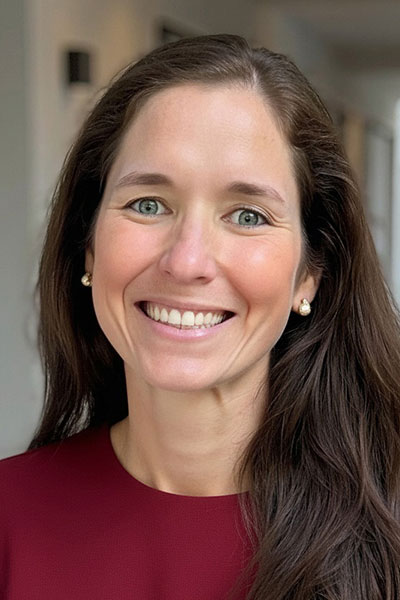
Recipient: Maria Pereda Ginocchio, MD, assistant professor of pediatrics, Tulane University, and pediatric bone marrow transplant physician, Manning Family Children’s Hospital
Project title of research award: Phase 1 Trial of Ruxolitinib added to Conditioning for Haploidentical or Mismatched Unrelated Donor Transplantation in Relapsed or Refractory Idiopathic Severe Aplastic Anemia
What does this recognition mean to you?
“This recognition is deeply meaningful to me because it affirms a career path rooted in purpose: advancing transplant and cellular therapy science while addressing inequities in access and outcomes for children and families who are often underserved. As a pediatric transplant physician-scientist trained across different health systems and countries, I have witnessed firsthand how disparities in donor availability, resources and research infrastructure directly shape patient outcomes. The ASTCT New Investigator Award validates not only the scientific rigor of my work, but also the importance of pursuing research that expands donor options and reduces toxicity. Personally, it represents a milestone of trust and encouragement from the transplant community at an early stage of my career, strengthening my commitment to develop investigator-initiated trials and to contribute meaningfully to the field of hematopoietic cell transplantation and cellular therapy.”
How will this award facilitate your ongoing work?
“This award will directly facilitate my ongoing work by providing both protected time and national-level recognition of this trial, possibly attracting centers across the U.S. to join the study. The funding associated with this award will be used to support the start of my project by supporting the essential early steps required to move the study from concept to execution. Specifically, it will help cover start-up costs such as regulatory preparation, research coordination, data management and initial correlative work. This support will strengthen multi-center collaboration and position the study for subsequent external funding and expansion.”
How did you first become interested in transplantation and cellular and gene therapy?
“My interest in transplantation and cellular and gene therapy developed through early clinical experiences caring for children with life-threatening hematologic disorders for whom transplantation represented the only curative option. During my medical school training in Lima, Peru, where access to therapy was the main limitation, and continuing on to subsequent pediatric hematology-oncology and transplant training, I was repeatedly struck by both the transformative potential of these therapies that are limited by donor availability, conditioning toxicity and health system factors that could determine the outcome of children and young adults, even in a highly developed country. Over time, this interest evolved into a focus on developing safer, more inclusive transplant and cellular therapy approaches, and on building research programs that intentionally address disparities while advancing innovative therapies for children.”
How do you hope your work influences the field?
“A central goal of this work is to fundamentally shift the treatment paradigm for severe aplastic anemia (SAA) by making upfront transplantation a feasible option for all children with SAA, independent of donor availability. By developing and testing alternative-donor, reduced-toxicity conditioning strategies, this research aims to move beyond the traditional stepwise approach that defers transplant for many patients. Instead, it supports timely, curative therapy without adding short- or long-term toxicities. If successful, the long-term plan is to roll these findings into an upfront transplant strategy using the optimal regimen identified in the Phase I trial, with the potential to be applied broadly across donor sources. Importantly, this approach is designed to be scalable and adaptable, allowing the regimen to be used in diverse health care settings and in any country, thereby extending the impact of this work beyond individual institutions and contributing to more equitable global access to curative transplantation for children and young adults with severe aplastic anemia.”
What excites you most about the future developments in the field of transplantation and cellular and gene therapy?
“What excites me most about the future of transplantation and cellular and gene therapy is the expanding ability to offer more curative options to patients who previously had few or none. Advances in donor selection, conditioning strategies, immune modulation and cellular and gene-based therapies are rapidly increasing the number of pathways to cure, rather than relying on a single standard approach. Equally important, these developments are creating opportunities to deliver curative therapies earlier and more safely, particularly for non-malignant diseases. The field is moving toward a future in which cure is not limited by geography, donor availability or toxicity, but defined by having multiple, effective options that can be applied across diverse clinical settings.”
The ASTCT New Investigator Awards (NIAs) are designed to encourage clinical and/or laboratory research by young investigators in the field of hematopoietic cell transplantation, cellular therapy and/or gene therapy. This includes application of these therapies to malignant diseases, both hematologic and solid tumors, non-malignant diseases, including hemoglobinopathies, immune deficiencies and autoimmune diseases. The award provides $50,000 per year for two years in support of research costs and/or salary. Visit the ASTCT website to learn more about the award.
Watch 2026 Tandem Meetings sessions on demand

If you missed a session or wish to review a session from the 2026 Tandem Meetings, you can access on-demand recordings on the Tandem Meetings website. Registered participants have digital access to scientific plenary and concurrent sessions, oral abstract sessions, honorific lectures, symposia and educational tracks.