 Follow ASTCT®
During the Feb. 6 APP Track session Use of AI in BMT, a panel of experts discussed the use of artificial intelligence (AI) in bone marrow transplantation (BMT).
Registered attendees and those with digital access to the 2026 Tandem Meetings | Transplantation & Cellular Therapy Meetings of ASTCT®and CIBMTR® can view the entire session on demand through the online program.
AI Applications in Cellular Therapy
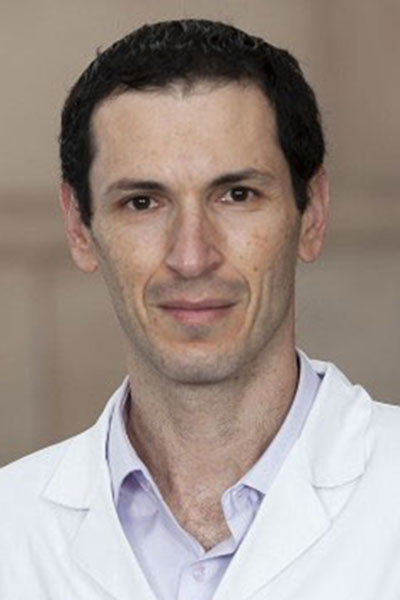
Roni Shouval, MD, PhD, the director of the Precision Cellular Therapy Laboratory and assistant attending physician at Memorial Sloan Kettering Cancer Center, discussed the potential applications of AI in cellular therapy.
“I think the main thing we have to consider in cellular therapy is, what are the challenges we face? And these are primarily toxicity and resistance. We’re trying to use AI to better understand and tackle these,” Dr. Shouval said.
He then presented several examples of AI applications, starting with biological discovery. Dr. Shouval’s team initiated a multicenter observational study to generate a comprehensive atlas of early CAR T toxicities. Using the data from this unsupervised learning method, the team identified three clusters corresponding to high-, mid- and low-toxicity levels. The team then examined the relationship of these clusters with outcomes and found that the toxicity phenotypes were associated with overall survival. The team also examined the biological basis of these clusters and found that patients in the high-toxicity group had elevated interferon gamma (IFN-γ) levels at baseline, which may be a potential target.
AI can also be utilized for monitoring during cellular therapy. Dr. Shouval investigated whether AI could be trained to automatically classify lymphocyte phenotypes on a large scale. The findings of his study indicated that AI models accurately distinguished lymphocyte subtypes. When combined with clinical variables in a multivariable analysis of progression-free survival (PFS), large lymphocyte expansion was associated with better PFS outcomes. Additionally, the models observed that larger cell morphology correlated with CAR T-cell expansion and an activated immune phenotype.
The last AI application for cellular therapy discussed was response prediction. Dr. Shouval and his team developed a specific multimodal framework and found that cumulative addition of data modalities improved CAR T response prediction.
Use of AI in BMT – Large Language Models
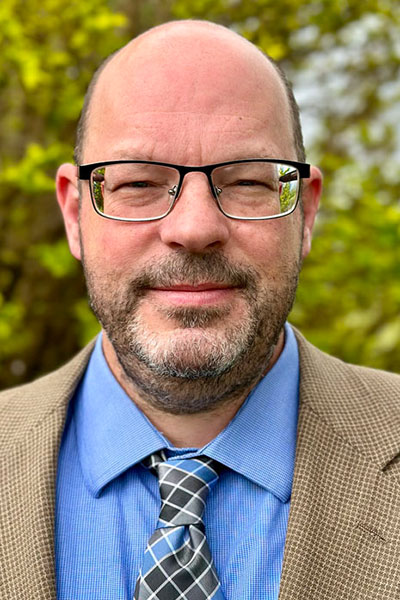
John Huber, PhD, MS, the lead analyst in the Division of Bone Marrow Transplantation and Immune Deficiency at Cincinnati Children’s Hospital Medical Center, discussed how AI is transforming support for patients with BMT and their families.
Patient and caregiver education has significantly improved over the last few decades, shifting from large binders to stage-specific booklets, roadmap-style apps, graphical journey maps and similar targeted materials.
“Over the next few years, I would expect these approaches to evolve further due to the highly public release of large language models,” Dr. Huber said.
There are several ways large language models (LLMs) may be used in the future to support families and patients. Some patients and families want to understand why clinicians make certain decisions. While connecting them to the literature can be grounding and valuable, scientific papers aren’t easily accessible across different health literacy levels. LLMs may help by summarizing literature in a language patients understand.
Another use case is transformation. Even if someone is interested in the information in a paper, they may not want to go deep into the literature. LLMs can be used to transform the information in that paper into something useful to the patients and families. For example, a symptom checklist material that parents can use to explain disease to their children, and podcast-style information summaries.
Dr. Huber’s final example was an interactive chat. A chatbot interface allows users to ask questions in natural language and get responses in a preferred style. Users can include additional context like screenshots from medical records, clinic notes or after-visit summaries, and the chatbot can assist in explaining these documents in clear language. People can follow up with more questions, request clarification or seek help in formulating questions for their care team.
Use of AI in BMT – Risk Prediction
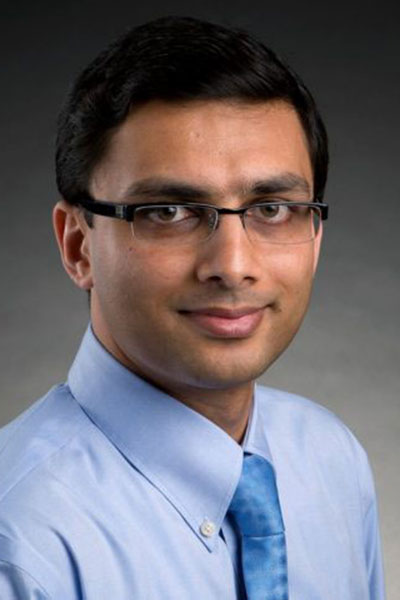
Akshay Sharma, MBBS, MSc, associate member at St. Jude Children’s Research Hospital, underlined the use of AI for risk prediction in treating BMT.
“I think most of us would agree that risk prediction is at the heart of everything that we do. From basic triage in the emergency department to complex decision making, we are constantly looking at the patient and trying to figure out how sick they are and what we need to do to make them feel better,” Dr. Sharma said.
Several risk prediction models exist in transplantation, but none account for the conditioning regimen or its intensity, nor do they evaluate the effects of graft infusion or conditioning on the patient. Additionally, they lack longitudinal data, and their predictive ability is rather limited.
To tackle this issue, Dr. Sharma and his team aimed to include longitudinal data collected during and after transplantation into a model that would ideally improve prediction accuracy.
They developed three models: one using only baseline variables, another with only longitudinal variables and a comprehensive model that combined both. Their results showed that the model performed better with longitudinal data, but the best results came from the combined data. Consequently, they incorporated longitudinal data into a graft-versus-host disease prediction model and observed that including all data significantly improved prediction accuracy.
Dr. Sharma emphasized that a model’s quality depends entirely on the data it receives. Flawed or incomplete data will lead to a poor model.