 Follow ASTCT®
An international panel discussed engraftment and mixed chimerism among young transplant patients in the pediatric plenary session Engraftment on the Edge: Precision Transplant Strategies for Non-Malignant Diseases on Feb. 5 at the 2026 Tandem Meetings | Transplantation & Cellular Therapy Meetings of ASTCT® and CIBMTR®.
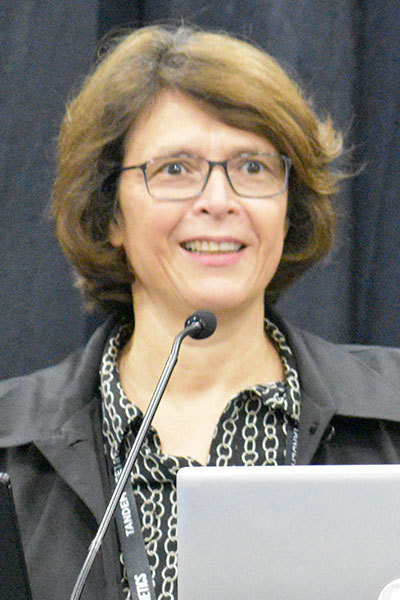
“We know that transplantation is absolutely curative for non-malignant diseases, but donor options are very limited, and this is true because most patients will not have a perfect matched sibling or a perfect matched unrelated donor (URD),” said Carmem Bonfim, MD, PhD, a professor of pediatrics and the scientific director of the Pediatric Transplant and Cellular Therapy Program at Duke University.
An unaffected matched related or matched URD is preferred for hematopoietic cell transplantation (HCT), yet less than a third of patients have a matched sibling, and a matched URD is identified for less than 40% of ethnic minorities receiving HCT, Dr. Bonfim noted. In the United States, the most common donor source in pediatrics is haploidentical, particularly among ethnic minority populations.
Haploidentical HCT (haplo-HCT) using post-transplant cyclophosphamide (PTCy) has been a game-changer, expanding the donor pool dramatically, said Dr. Bonfim, who is also a senior consultant at the Pediatric Blood and Marrow Transplantation Program at Hospital Pequeno Principe, a professor at the Pele Pequeno Principe Research Institute and a professor at the Federal University of Parana in Curitiba, Brazil.
“PTCy absolutely changed the landscape of allogeneic transplantation across the globe,” she said. “It is safe. It is effective. It is low-cost. It has no need for graft manipulation. And, it’s simple.”
Despite its proven success in malignant disease in adults, there is a significant learning curve for adapting haplo-HCT with PTCy for non-malignant disease.
“For non-malignant disease, you really need a stable engraftment with minimal toxicity, and many different levels of chimerism may be needed according to each disease. Graft failure remains a major challenge for PTCy and for T-cell depletion techniques,” Dr. Bonfim said, adding that to improve engraftment with PTCy, anti-thymocyte globulin (ATG) and/or higher total body irradiation (TBI) doses may be needed.

Pietro Merli, MD, explored graft engineering for haploidentical, mismatched family or unrelated donor HCT for non-malignant diseases. A consultant at the Hematopoietic Stem Cell Transplantation and Cellular Therapies Unit of the Department of Pediatric Hematology and Oncology, IRCCS Ospedale Pediatrico Bambino Gesù in Rome, Italy, and an associate professor of pediatrics at Saint Camillus International University of Health Sciences, also in Rome, he presented evidence that ex vivo T cell-depleted haplo-HSCTs are highly effective transplantation strategies for pediatric patients with non-malignant disorders.
The incidence of both acute and chronic graft-versus-host disease (GVHD) is low using these approaches, which preserves quality of life and life expectancy, Dr. Merli explained. Graft failure, either primary or secondary, and viral infections due to delayed immune reconstitution are possible complications; however, Dr. Merli said that because no or low post-transplant pharmacological GVHD prophylaxis is used in most of these platforms, these depletion strategies could be improved through T-cell or natural killer (NK) cell add-backs.
Dr. Merli noted that further optimization could come through supportive therapy and new antivirals, but for now ex vivo T cell-depleted haplo-HSCTs come with drawbacks, including high upfront costs.
“Because of low incidence of GVHD, in the long term, they could be cost-effective, but these transplants are resource-consuming,” Dr. Merli said. “We probably need prospective studies to compare PTCy and other platforms, but I’m not convinced there is a single strategy for all diseases.”
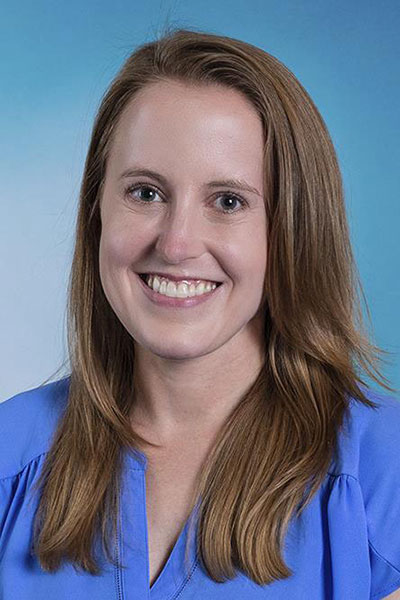
Laura McLaughlin, MD, examined the impact of conditioning intensity on graft rejection and mixed chimerism. She is an assistant professor of pediatrics and the medical director of the Bone Marrow Transplant Laboratory at Children’s Hospital Colorado.
In malignant pediatric HCT, conditioning intensity is associated with high rates of engraftment, as well as high risk of toxicity and GVHD. In non-malignant pediatric disease, the goal is to achieve stable donor chimerism using the lowest intensity conditioning necessary to correct the underlying disease. For many disease states, the use of non-myeloablative (NMA) conditioning comes with a high risk of rejection, meanwhile the risk of conditioning-associated toxicity and GVHD is the highest with myeloablative conditioning (MAC), Dr. McLaughlin noted.
“Often the best balance between an acceptably low risk of both graft rejection, toxicity and GVHD falls in a narrow window of reduced intensity conditioning, or RIC, but what if we were able to modify our approach to conditioning such that we could reduce the risk of graft rejection without adding to the risk of conditioning-related toxicity or GVHD?” Dr. McLaughlin said. “Altering this graph rejection curve would enable a much wider window.”
She shared data showing that peri-transplant Janus kinase (JAK) 1/2 inhibition promotes donor cell engraftment and cross-tolerance in murine MHC-mismatched bone marrow transplant. Additionally, peri-transplant ruxolitinib might decrease the barrier to engraftment to reduce graft rejection in high-risk disease states such as sickle cell disease, which will be tested in an upcoming trial.
“Peri-transplant JAK 1/2 inhibition could be a viable strategy to promote sustained mixed chimerism without the risk of GVHD,” Dr. McLaughlin said.
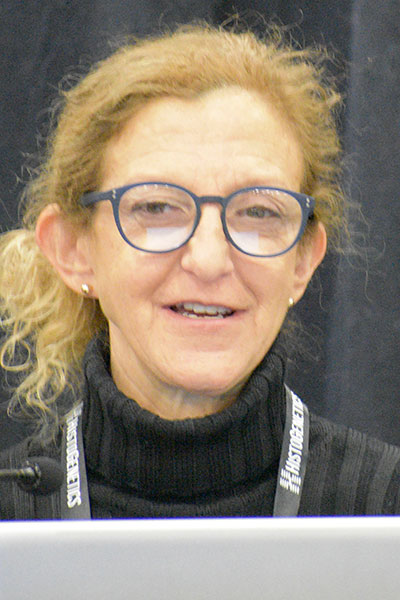
The session’s chair, Susan Prockop, MD, discussed the management of mixed chimerism and graft failure in non-malignant diseases. Dr. Prockop is an associate professor of pediatrics at Harvard Medical School, and the program director for Clinical and Translational Research and outpatient clinic director for the Hematopoietic (Stem) Cell Transplant Program at Dana-Farber/Boston Children’s Cancer and Blood Disorders Center.
“Graft failure is associated with significant morbidity and mortality, and typically requires a second transplant, but there are questions that remain around the best conditioning and donor for a second transplant,” she said.
Moreover, the complexity of incomplete donor chimerism and the variety of implications and interventions associated with it are difficult to study, because of the incomplete nature of reporting, the wide variety of interventions and of triggers for intervention, the latter of which are rarely reported in studies, Dr. Prockop added.
“I think there are two priorities. One is to design regimens that offer low toxicity and a low incidence of graft failure … and the other is to measure consistently and better define appropriate triggers for intervention,” Dr. Prockop said. “We can use lineage-specific chimerism with high sensitivity, but sequentially over time to continue to capture elements that can control as well as result from incomplete engraftment.”
Watch 2026 Tandem Meetings sessions on demand

If you missed a session or wish to review a session from the 2026 Tandem Meetings, you can access on-demand recordings on the Tandem Meetings website. Registered participants have digital access to scientific plenary and concurrent sessions, oral abstract sessions, honorific lectures, symposia and educational tracks.