 Follow ASTCT®
The Feb. 7 plenary session AI: Coming TO You or Coming FOR You featured four speakers who explored the current and emerging role of artificial intelligence (AI) applications in transplant and cell therapy.
Registered attendees and those with registered digital access to the 2026 Tandem Meetings | Transplantation & Cellular Therapy Meetings of ASTCT® and CIBMTR® can replay the entire session, including the presentations and the robust Q&A segment, via on-demand viewing.
Don’t Forget the Doctor and Their Clinical Judgement
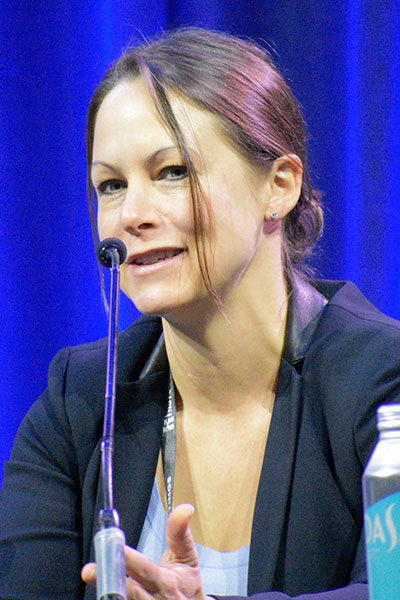
Shannon R. McCurdy, MD, shared findings demonstrating that “physician gestalt,” or clinical judgement, was a key machine learning (ML) model-identified factor predictive of survival after hematopoietic stem cell transplant (HSCT) in older patients.
“One of the biggest changes in allogeneic transplant over the past decade has been an increase in use of transplant in older adults,” said Dr. McCurdy, an assistant professor of medicine at the Hospital of the University of Pennsylvania.
While septuagenarians made up only 1% of HSCT recipients in 2005, the proportion of transplant recipients aged older than 65 years in 2023 was 29%. Despite increased adoption of HSCT, survival outcomes are inferior for older adults, compared to younger transplant recipients, driven by higher non-relapse mortality. Geriatric assessments and frailty scores can help optimize patient selection and outcomes.
Dr. McCurdy and colleagues conducted an observational study comparing the performance of Fried’s Frailty Phenotype (FFP), a standardized frailty tool, to that of physician gestalt — a broad term that encapsulates the clinician’s judgment, based on their experience, patient presentation and clinical context — in predicting survival in older HSCT recipients.
Overall, physician gestalt had value in predicting survival of older HSCT recipients with some limitations. For instance, gestalt had lower accuracy for predicting survival in female HSCT recipients.
But in a direct comparison between physician gestalt and AI, a machine learning AI program identified clinician gestalt as the top predictor of overall survival after HCT.
Dr. McCurdy said that the study suggested that human judgment will always be a valued part of clinical care, but as AI advances it can assist in improving patient care by being used to identify patterns uncovered by physician perceptions.
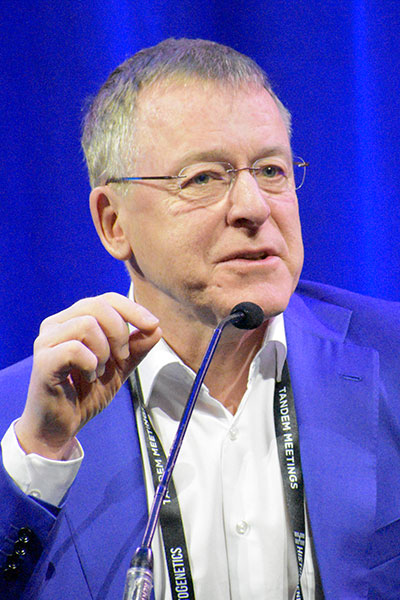
From Diagnosis to Targeted Treatment: AI in a High Throughput Diagnostic Lab
Torsten Haferlach, MD, co-founder and part-owner of the Munich Leukemia Laboratory (MLL), highlighted the range of assessments — cytomorphology, cytogenetics, histology, immunophenotyping, fluorescence in situ hybridization (FISH) and sequencing/molecular genetics — currently integrated in the diagnostic workflow for hematologic malignancies.
“Phenotype is not always easy to learn,” said Dr. Haferlach as he highlighted the challenges with training AI models on multimodal data to improve diagnostic accuracy.
Dr. Haferlach emphasized the importance of experienced clinicians guiding AI pattern recognition, calling clinicians the “ground truth” because their input is a critical component in the training and fine-tuning of AI models.
With expert input, an AI model designed to differentiate between 25 different cell classes using digitized peripheral blood smear images achieved a diagnostic accuracy of 94%. Notably, real-world diagnostic accuracy of the model was 88%, underscoring the need for continued model refinement.
Dr. Haferlach discussed AI models for evaluating other data, including cytometric flow results from bone marrow aspirates and karyograms generated from metaphase chromosome spreads.
At MLL, large language models (LLMs) are being deployed to generate reports that include test types, findings and interpretations, and also practice guidelines and diagnoses. Currently, the overall accuracy of LLM disease diagnosis is 87%, and 92% of MLL reports are AI-generated automatically, rapidly and with approximately only 10% requiring any corrections.
As AI models mature and are adopted for routine use, the training requirements for personnel who evaluate multimodal data will also change, Dr. Haferlach noted.
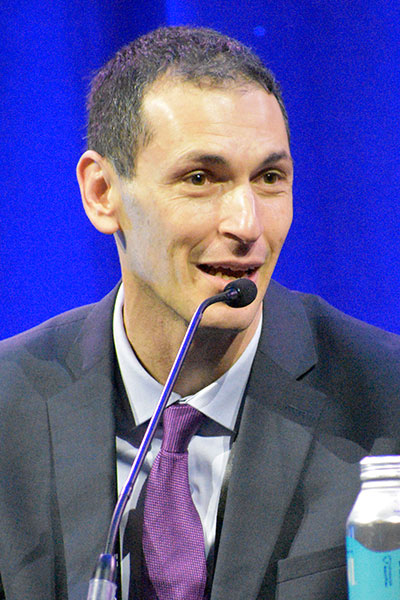
From Computer to Bedside and Back: Artificial Intelligence in Cellular Therapy
Roni Shouval, MD, PhD, director of the Precision Cellular Therapy Laboratory and assistant attending at Memorial Sloan Kettering Cancer Center, illustrated AI applications for parsing high-dimensional temporal patient-level data of CAR T-therapy recipients. He reviewed three examples — the MorphoCAR model used in the CARTOGRAPHY study, the unsupervised Gaussian InflaMix model that integrates baseline laboratory and cytokine measures, and the Multimodal Mixture Model (MMM) for handling missing data.
In the multicenter observational CARTOGRAPHY study, trained experts comprehensively documented the nature and severity of early toxicities — cytokine release syndrome, immune effector-cell associated neurotoxicity syndrome, infection and immune effector cell-associated hematologic toxicity — daily for the first 30 days, for over 900 patients receiving CD19 or B-cell maturation antigen (BCMA)-directed CAR T products.
Dr. Shouval and colleagues used MorphoCAR, a deep learning algorithm-based cell-type classifier, to characterize immune cell and CAR T dynamics in over 600 patients in the CARTOGRAPHY cohort.
The InflaMix model helped identify an inflammatory signature associated with poor response and unfavorable survival following CAR T-therapy in patients with large B-cell lymphoma.
Missing data, for specific modalities or patients or time points, is a recurring challenge in multimodal AI model development. MMM, a novel late fusion machine learning algorithm that combines independently trained AI models, can help overcome this challenge. In a proof-of-principle study, MMM improved CAR T-therapy response prediction based on partial multimodal datasets.
Dr. Shouval concluded that progress and studies of AI-enabled models for multimodal longitudinal data analysis require multidisciplinary, multi-institutional collaboration.
Predict, Prevent, Transform—AI as a Disruptor in Biomedicine
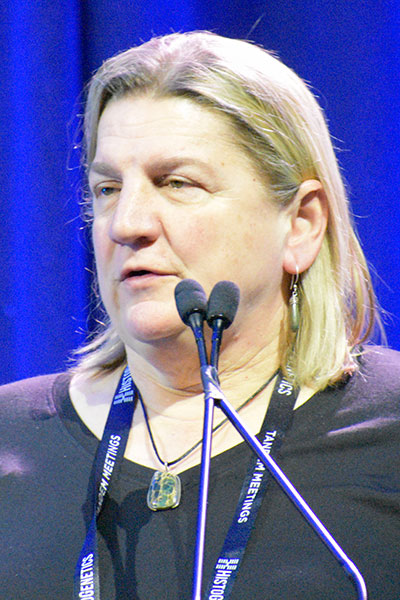
Shannon McWeeney, PhD, offered the attendees a framework for considering the implications of AI in transplant and cellular therapy.
Dr. McWeeney, a professor of oncological sciences and chief data officer at the Oregon Health and Science University Knight Cancer Institute, framed the potential for AI across three domains: for prediction, to reveal invisible risks earlier; for prevention, to act on risk before crisis; and for transformation, to redesign the approach to discovering and testing therapies.
In the predictive AI domain, Dr. McWeeney highlighted the example of daGOAT, a dynamic probabilistic algorithm that enables monitoring of over 100 time-varying variables after allogeneic HSCT and recalculates daily acute graft-versus-host disease (GVHD) risk.
In one study, the daGOAT model was deployed prospectively to make recommendations for pharmacological prophylaxis, as well as dosing adjustments, in HSCT recipients at risk of active GVHD.
“This is an early signal, as this was a proof-of-concept study,” Dr. McWeeney said.
Dr. McWeeney also spoke about rentosertib, the first example of a drug for which the target identification and molecular design was facilitated by generative AI-enabled simulations. AI simulations can rapidly accelerate the drug discovery timeline; target identification and the rentosertib design took place over 18 months, compared to the typical 7-year timeline using conventional methods.
Prediction without action is data, not insight, Dr. McWeeney cautioned, as model development should focus on accuracy/clinical performance as well as usability/accessibility, through optimization of integration into the clinical workflow.
Watch 2026 Tandem Meetings sessions on demand
If you missed a session or wish to review a session from the 2026 Tandem Meetings, you can access on-demand recordings on the Tandem Meetings website. Registered participants have digital access to scientific plenary and concurrent sessions, oral abstract sessions, honorific lectures, symposia and educational tracks.