 Follow ASTCT®
Six speakers reviewed updated clinical trial efficacy results, real-world data (RWD), and tumor microenvironment (TME) biomarker analyses for chimeric antigen receptor T-cell (CAR T)-therapies in lymphoma during the Feb. 6. Oral Abstract Session – I.
The main highlights of the presentations are provided below. The session can be viewed on demand via the online program by in-person attendees and by those with registered digital access to the 2026 Tandem Meetings | Transplantation & Cellular Therapy Meetings of ASTCT® and CIBMTR®.
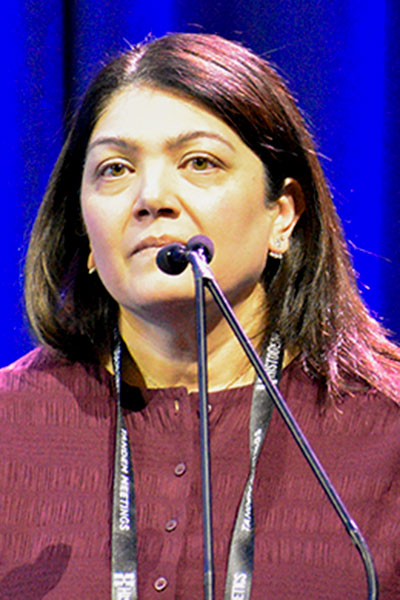
Three-Year Efficacy and Longitudinal Safety of Lisocabtagene Maraleucel (liso-cel) in Patients with Third-Line or Later (3L+) Follicular Lymphoma (FL) from TRANSCEND FL
Lisocabtagene maraleucel (liso-cel) demonstrated high response rates in patients with FL who received a CD19-directed CAR T-therapy as third or subsequent line of treatment in the pivotal Phase II TRANSCEND FL trial, said Sairah Ahmed, MD, associate professor and director of the CAR T program at the University of Texas MD Anderson Cancer Center.
The efficacy dataset included 103 liso-cel–treated patients, with a median on-study follow-up of 41.5 months. Patients were stratified by progression of disease ≤24 months from initial immunochemotherapy (POD24), bulky disease, refractory to both an anti-CD20 antibody and an alkylating agent (double-refractory disease), and prior bendamustine treatment.
The data showed continued high rates of deep response, with a complete response (CR) rate of 94%, and durable responses, with a 36-month duration of response, rate of 70%.
After three years of follow-up of a single infusion of liso-cel, we continued to see high rates of deep and durable responses with sustained survival in patients with 3L+ FL,” Dr. Ahmed said. She also characterized the three-year overall response rate of 60-83% for patients across a number of high-risk sub-groups as “quite favorable” in this patient population.
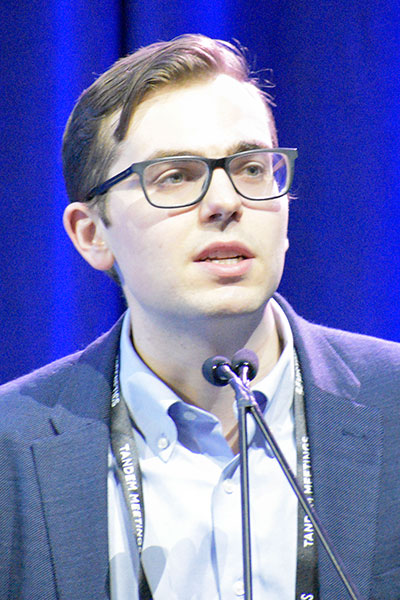
Tumor Microenvironment Characterization from Cell-Free RNA In Plasma to Predict the Success of CAR T Therapy in Large B Cell Lymphoma
Conor Loy, PhD, the CEO and co-founder of RoMix Biosciences, sought to develop a minimally invasive approach to characterize the TME in patients with large B-cell lymphoma (LBCL).
Dr. Loy and colleagues sought to build on a previous study that identified three distinct TME archetypes. These archetypes — lymph node-like (LN), fibroblast/macrophage and exhausted T-cell — were identified by an international research group whose study also showed that patients with the LN archetype had higher one-year progression-free response rates with axicabtagene ciloleucel (axi-cel), a CD19-targeted CAR T-therapy, in comparison to patients with the two other archetypes.
Using their cfRNA approach, Dr. Loy and colleagues showed that the transcriptomic profile of the LN archetype was recapitulated in the cfRNA signature of TME biopsy specimens. No recapitulation was observed in the samples from the fibroblast/macrophage or the exhausted T-cell TME archetypes. LN archetype-associated transcripts were also better predictors of response to CAR T-therapy.
The “cfRNA enabled a minimally invasive TME readout,” Dr. Loy said. “These [cfRNA] signatures of lymphoid structures and fibrosis are predictive of CAR T response.”
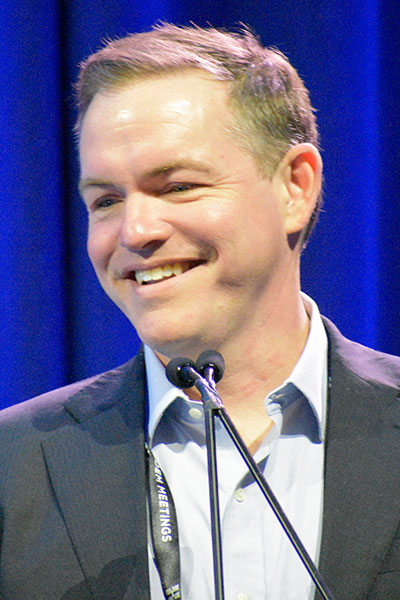
Phase II Interim Results for Rapcabtagene Autoleucel (YTB323) in Patients With First-Line, High-Risk Large B-cell Lymphoma
While frontline chemotherapy is effective in about 70% of patients with LBCL, “patients with high-risk disease, classified sometimes by cell of origin, but more commonly by [International Prognostic Index] or by translocations as ‘double-hit’ lymphoma, do not do as well with chemotherapy,” said Jason Westin, MD, MS, FACP, FASCO, a professor of lymphoma and myeloma at The University of Texas MD Anderson Cancer Center.
Based on the successes of CAR T-therapy in relapsed/refractory LBCL, Dr. Westin and colleagues sought to explore the potential of rapcabtagene autoleucel (previously called YTB323) in the upfront setting in high-risk patients with LBCL.
Interim outcomes analyses of data from a single-arm Phase II trial showed an ORR of 89% and a CR rate of 74%, with a median follow-up of 8.5 months in rapcabtagene autoleucel recipients. The efficacy was consistent across patient subgroups, regardless of cell of origin, rearrangements in MYC/BCL2/BCL6 and high-risk features.
Dr. Westin discussed the safety data — 89% of patients had no clinically significant cytokine release syndrome (CRS; grade 2 to 4 CRS) and no CRS events of grade 3 or higher were reported; 92% of patients had no immune effector cell-associated neurotoxicity syndrome.
“Further studies are warranted to confirm the comparative benefits [of rapcabtagene autoleucel] in the frontline high-risk LBCL setting,” Dr. Westin said.
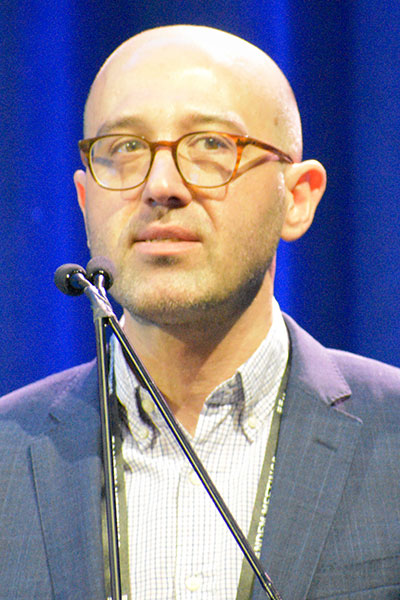
Five-Year Update of the Phase 2 ELARA Trial of Tisagenlecleucel in Patients (pts) With Relapsed/Refractory Follicular Lymphoma (r/r FL)
In the Phase II ELARA trial, tisagenlecleucel demonstrated sustained high rates of durable responses in patients with r/r FL, including those with POD24 and high tumor burden.
Peter Riedell, MD, an associate professor of medicine at the University of Chicago, shared the final analysis of data from ELARA, after a median follow-up of over 5 years.
Consistent with previous efficacy and safety results, tisagenlecleucel demonstrated consistently robust and durable response rates, with a CR rate of 68.1%. There were no new safety signals. Notably, 61% of patients maintained response at 57 months.
Dr. Riedell said: “We see a median progression-free survival [PFS] of 53.2 months. And importantly, no relapses were reported after 36 months, which translated into durable survival in these patients.”
He also noted that “greater than 75% of the patients who received tisagenlecleucel were alive, and approximately half remained progression-free at this final five-year analysis, suggesting curative potential for tisagenlecleucel in adult patients with r/r FL after two or more prior lines of systemic therapy.”
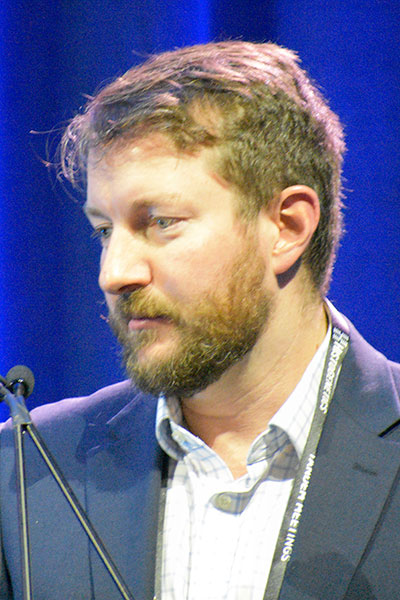
Real-World Study of the Effectiveness, Safety, and Health Care Resource Utilization of Lisocabtagene Maraleucel and Axicabtagene Ciloleucel in Patients With Relapsed or Refractory Large B-Cell Lymphoma in the Second-Line Treatment Setting
Nathan Denlinger, DO, an assistant professor of hematology at The Ohio State University Comprehensive Cancer Center, presented research comparing the two commercial CAR T-therapies approved for second-line LBCL, liso-cel and axi-cel.
“While pivotal trials established the baseline efficacy and toxicity for these two products, no head-to-head [comparative] data exist. Thus, real-world evidence can help inform evidence-based decision-making,” Dr. Denlinger said.
He and colleagues performed a retrospective analysis of clinical outcomes and healthcare resource utilization (HRCU) for 198 liso-cel and 275 axi-cel recipients in the US Flatiron Health Research Database.
There were no clinically meaningful differences in efficacy, in terms of PFS and OS, between liso-cel and axi-cel. However, liso-cel recipients were significantly less likely to experience immune-related adverse events (irAEs) than axi-cel recipients. Liso-cel recipients also needed fewer pharmacological interventions for irAEs and had fewer hospitalizations, ICU admissions and shorter hospital stays.
Dr. Denlinger said these data are consistent with other RWD analyses. He added that “collectively, these findings further support liso-cel as a well-tolerated, patient-centered and resource-efficient second-line treatment option for relapsed/refractory LBCL compared with axi-cel.”
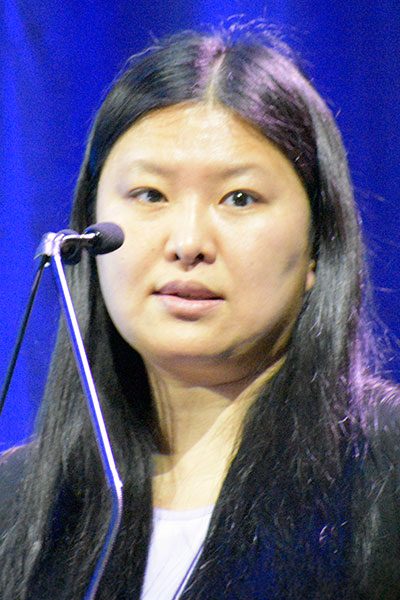
Favorable Real-World Outcomes of Lisocabtagene Maraleucel in Chronic Lymphocytic Leukemia
Jennifer Huang, MD, PhD, reported on research focused on real-world efficacy and safety of liso-cel, which was approved for relapsed/refractory chronic lymphocytic leukemia (CLL) [or small lymphocytic leukemia (SLL)] in March of 2024 based on the TRANSCEND CLL-004 trial.
Dr. Huang, an assistant professor of hematology/oncology at Fred Hutch Cancer Center and the University of Washington, and colleagues analyzed data for second-line liso-cel recipients across 19 U.S. sites.
Among 41 liso-cel recipients, the real-world ORR was 85% and the CR rate was 56%. “This response rate is better than liso-cel monotherapy as described in TRANSCEND, and the efficacy is perhaps more consistent with the TRANSCEND ibrutinib cohort,” Dr. Huang noted.
In TRANSCEND CLL-004, concurrent administration of ibrutinib with liso-cel demonstrated improved efficacy — an ORR of 86% and a CR rate of 45% — compared to liso-cel monotherapy, which had a 44% ORR and 20% CR rate.
Dr. Huang said that higher use of Bruton’s tyrosine kinase (BTK) inhibitors as bridging therapy prior to CAR T infusion may account for the superior real-world efficacy profile of liso-cel, compared to clinical trial outcomes.
Watch 2026 Tandem Meetings sessions on demand

If you missed a session or wish to review a session from the 2026 Tandem Meetings, you can access on-demand recordings on the Tandem Meetings website. Registered participants have digital access to scientific plenary and concurrent sessions, oral abstract sessions, honorific lectures, symposia and educational tracks.