 Follow ASTCT®
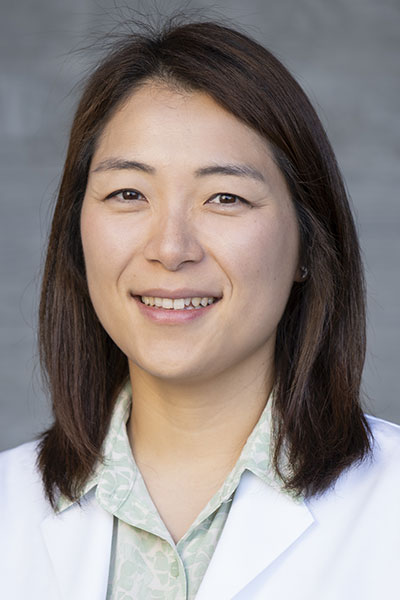
Recipient: Sunmin Park, MD, PhD, assistant professor, Division of Leukemia, Department of Hematology and Hematopoietic Cell Transplantation, City of Hope
Project title of research award: Enhancing CD6-CAR Treg Therapy with Low-Dose IL-2 in Chronic GVHD
What does this recognition mean to you?
“I am very grateful for this recognition, particularly as a junior faculty member building an independent research program in graft-versus-host disease (GVHD) and cellular therapy. This award provides the opportunity to pursue a project focused on developing a novel cellular therapy for GVHD, which remains a major contributor to morbidity and non-relapse mortality following allogeneic HCT. As a junior investigator, this support is critical for establishing the independence and continuity of my research program. I am particularly encouraged by the early results from our pilot study using CD6 CAR Tregs, and the opportunity to combine this approach with low-dose IL-2 (an established therapy in chronic GVHD) to enhance CAR Treg function is both clinically and scientifically meaningful to me.”
How will this award facilitate your ongoing work?
“This award directly supports preclinical studies evaluating CD6 CAR Tregs in combination with low-dose IL-2 to enhance regulatory T-cell function, proliferation and persistence, providing the biologic rationale for a pilot clinical study in patients with severe chronic GVHD. The pilot trial, which was developed and refined at the ASTCT Clinical Research Training Course (CRTC) last year, will evaluate the safety of combining these two modalities and help define the optimal biologic cell dose of CD6 CAR Tregs.”
How did you first become interested in transplantation and cellular and gene therapy?
“I was drawn to transplantation during my hematology/oncology fellowship after caring for several patients with severe steroid-refractory GVHD who ultimately died from complications of the disease and its immunosuppressive treatments. These therapies carry substantial toxicity, including life-threatening infections, and it was difficult to reconcile curing the underlying malignancy only to lose patients to transplant-related complications. These experiences motivated my interest in developing immune-based therapies for GVHD and led me to City of Hope for further training and my first faculty position. City of Hope has a long-standing history of developing novel cellular therapies, and my mentors here developed a regulatory T-cell–based therapy targeting CD6, which is expressed on inflammatory T-cells. GVHD was a natural and compelling disease context in which to explore this approach and its combination with low-dose IL-2.”
How do you hope your work influences the field?
“I hope this work helps establish immune-regulatory cellular therapies as a viable and durable strategy for preventing and treating chronic GVHD. By combining antigen-directed CAR Tregs with cytokine support using low-dose IL-2, my goal is to develop a safe, effective and durable cellular therapy capable of restoring immune tolerance with sustained clinical benefit. I also hope to define how this approach can synergize with existing GVHD therapies such as ruxolitinib. More broadly, while cellular therapies have traditionally been developed to treat malignancy, I hope this work contributes to expanding regulatory T-cell–based therapies into GVHD and other inflammatory and autoimmune conditions.”
What excites you most about the future developments in the field of transplantation and cellular and gene therapy?
“I am excited by the rapid evolution of engineered cellular therapies and their expanding applications beyond cancer. For early-career investigators, this is an especially energizing time, as advances in cell engineering and translational trial design make it possible to bring innovative immune-regulatory therapies from the laboratory to patients more efficiently than ever before. Hematopoietic cell transplantation is the oldest form of immunotherapy and remains the only curative option for many hematologic diseases. I am particularly excited by scientifically driven advances in graft engineering and the integration of transplantation with cellular therapies — not only to treat disease and prevent relapse, but also to address transplant-related complications such as GVHD.”
The ASTCT New Investigator Awards (NIAs) are designed to encourage clinical and/or laboratory research by young investigators in the field of hematopoietic cell transplantation, cellular therapy and/or gene therapy. This includes application of these therapies to malignant diseases, both hematologic and solid tumors, non-malignant diseases, including hemoglobinopathies, immune deficiencies and autoimmune diseases. The award provides $50,000 per year for two years in support of research costs and/or salary. Visit the ASTCT website to learn more about the award.
Watch 2026 Tandem Meetings sessions on demand

If you missed a session or wish to review a session from the 2026 Tandem Meetings, you can access on-demand recordings on the Tandem Meetings website. Registered participants have digital access to scientific plenary and concurrent sessions, oral abstract sessions, honorific lectures, symposia and educational tracks.