 Follow ASTCT®
On Thursday, Feb. 5, the IT and Informatics Track will bring a full day of compelling topics, such as workflow automation, data automation and artificial intelligence (AI), to the 2026 Tandem Meetings | Transplantation & Cellular Therapy Meetings of ASTCT® and CIBMTR®.
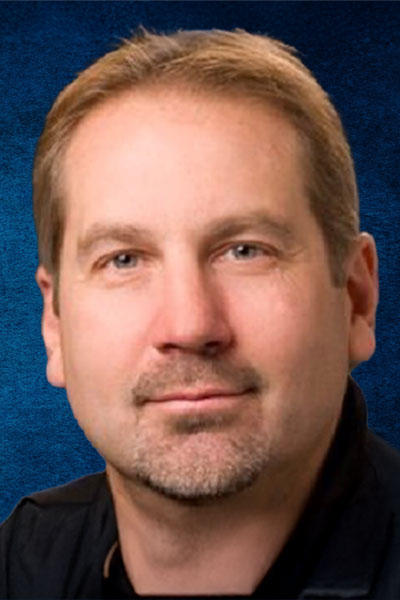
“We’re highlighting technology methods that shape the field of transplantation and cellular therapy,” said Todd Schei, BS, the IT and Informatics Track organizer. “We’re exploring how we can deploy workflow automation and AI together to reduce burden, increase productivity and enhance the speed of research-generated insights.”
Two keynote sessions will lead off the programming and set the tone for the dual focus on clinical care and technology: the Physician Keynote and the Technical Keynote. (The complete IT and Informatics Track agenda is listed at the end of this article.)
Jeremy Warner, MD, a professor of biostatistics and medicine at Brown University, and an oncologist at Brown University Health Cancer Institute, will present the Physician Keynote, Hemonc.Org/HemOncKB AACR on Creating a Hematology Data Model for Genie.
Dr. Warner also serves as the chief software architect for Hemonc.org, a comprehensive resource site for hematology and oncology healthcare professionals, whose data is actively used or analyzed by several large-scale registries, such as American Association for Cancer Research (AACR) Project GENIE.
Immediately following Warner’s presentation, Aziz Nazha, MD, a hematologist at Thomas Jefferson University, will present the Technical Keynote, Artificial Intelligence in Hematology.
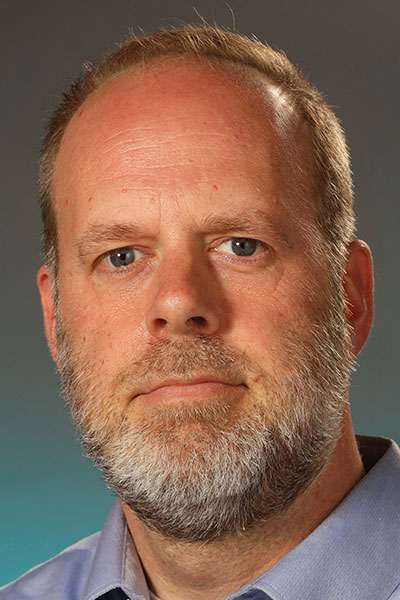
Dr. Nazha, the global head of Incyte AI Innovations Institute and former director of the Cleveland Clinic’s Center for Clinical Artificial Intelligence, has extensively worked on the application of AI in the diagnosis, prognosis and treatment selection for patients.
This year’s program arrives at a time when healthcare organizations are investigating how to best design systems and processes that are optimized for AI, be it generative AI, predictive analytics using machine learning or even intelligent systems, like agentic AI.
“Ready or not, AI is here and will play an increasing role in our personal and professional lives,” said Matt Prestegaard, BA, the senior director of research technology for CIBMTR IT at NMDP. “In that light, AI literacy is important not just for IT and Informatics professionals, but for clinical and administrative professionals as well. Working together, we can find the ways that AI can enhance our productivity and generate new insights, safely and ethically.”
Actual successes and challenges of applying AI in transplantation and cellular therapy will be the focus of the afternoon panel presentation, Uses of AI in Cellular Therapy.

“We want to hear how centers are implementing AI and workflow automation together to more efficiently deploy their programs,” said Erik Bergman, MBA, MS, senior director for IT at CIBMTR. “The panel discussion will invite interactive discussion with diverse experts in the application of AI to address real-world use cases.”
Chaired by Bridget Wakaruk, the manager for project management for CIBMTR Data Operations at NMDP, the panel will include Dr. Naha; Wasay Khan, MD, assistant professor and associate director of the Data Science Institute at Medical College of Wisconsin; Amelia Scheck, manager of clinical data management, medicine for med/blood and marrow transplantation at Stanford Medicine; and Giri Reddy, head of AI and modern architecture at NMDP.
“This field changes so vastly over a short period of time, so we’re focusing on the latest questions and innovations by featuring a panel format that will be open, relevant, entertaining and interesting to hear,” Schei said.
Schei added that the program’s emphasis on actual AI applications will provide attendees a realistic assessment of the limitations and possibilities of AI being within transplantation and cellular therapy.
“We want to examine if and how AI can be a critical tool to improve our ability and speed to qualify data in ways in which our systems might have been previously limited,” Schei said. “These discussions are all about how we secure new models as we redefine decision-making and operational workflows so that we learn more from our data and better serve our patients.”
IT and Informatics Track Agenda
The most up-to-date IT and Informatics Track agenda and the full 2026 Tandem Meetings program are available on the online program. All IT and Informatics Track sessions take place in Room 250 of the Salt Palace Convention Center, unless noted. All time listings are Mountain Standard Time.
Thursday, Feb. 5
- 8:00 – 8:30 a.m. Meet & Greet
- 8:30 – 8:45 a.m. Welcome & ASTCT Updates
- 8:45 – 9:30 a.m. Physician Keynote
- 9:30 – 10:00 a.m. Technical Keynote
- 10:00 – 10:30 a.m. Morning Break, Exhibit Hall
- 10:30 – 11:00 a.m. CIBMTR Updates
- 11 a.m. – 12:00 p.m. Center Abstracts / Case Studies
- 12:00 – 1:00 p.m. Lunch, Exhibit Hall
- 1:00 – 2:00 p.m. Panel: Uses of AI in Cellular Therapy
- 2:00 – 2:30 p.m. Data Automation
- 2:30 – 3:00 p.m. Breakout Session
- 3:00 – 3:30 p.m. Afternoon Break, Hall 1
- 3:30 – 4:00 p.m. User Group and Vendor Presentations
- 4:00 – 4:30 p.m. Wrap Up
Watch 2026 Tandem Meetings sessions on demand

If you missed a session or wish to review a session from the 2026 Tandem Meetings, you can access on-demand recordings on the Tandem Meetings website. Registered participants have digital access to scientific plenary and concurrent sessions, oral abstract sessions, honorific lectures, symposia and educational tracks.