 Follow ASTCT®
The most recent advances in pediatric transplant and cell therapy, including precision transplant strategies for non-malignant diseases, new directions for CAR-T therapy, psychosocial determinants of health, and equity and access to cellular and gene therapy for children, will fill the day-long agenda for the Pediatric Track at the 2026 Tandem Meetings | Transplantation & Cellular Therapy Meetings of ASTCT® and CIBMTR®. (The full Pediatric Track agenda appears at the end of this article.)
The programming on Thursday, Feb. 5, will begin and end with high-interest sessions. Plenary: Engraftment on the Edge: Precision Transplant Strategies for Non-Malignant Diseases opens as the first session at 8:10 a.m., and Pediatric Best Abstracts closes the day’s programming at 3:30 p.m. MST.
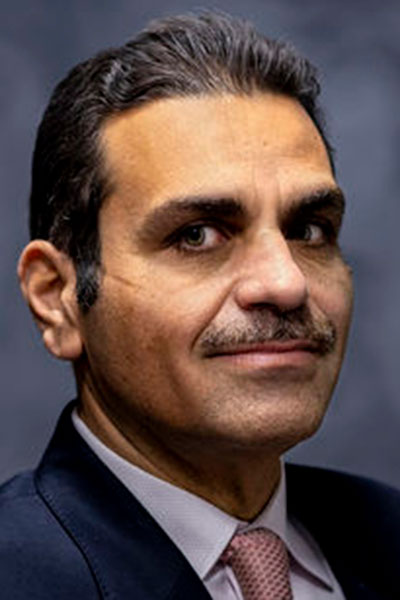
“The pediatric plenary session addresses a theme we commonly encounter in practice, which is engraftment using various grafts, including graft manipulation and management of mixed chimerism,” said Track Chair Hisham Abdel-Azim, MD, MS. “We’ll address what to avoid, what to overcome. Is it best to do graft engineering or do a PTCy (post-transplant cyclophosphamide)? How do we balance the intensity of the conditioning with the risk for graft rejection or mixed chimerism or the toxicities associated with it, and how do we manage such situations from a practical perspective? These are all very applicable points because of the large volume of non-malignant disease transplants that happen in children and young adults.”
Dr. Abdel-Azim is the division chief and endowed chair for Transplant and Cell Therapy/Hematological Malignancies, the director of the Combined Adult and Pediatric Transplant and Cell Therapy Program, the director of the Leukemia Research Program and a professor of pediatrics, medicine and basic sciences at Loma Linda University Cancer Center, Loma Linda University School of Medicine, Children’s Hospital and Medical Center.
The pediatric abstract session at the end of the day will showcase cutting-edge research applicable to pediatric and young adult patients, much of which will be presented to the scientific community for the first time.
“Most of the sessions are structured to compare and contrast two different approaches to themes commonly encountered in clinical practice. Some of the sessions provide unique information about where we are applying the successes that have happened in hematological malignancies into the solid tumor area, what barriers still exist and how to overcome them,” explained Dr. Abdel-Azim. “The other aspect, which is more unique to children, is addressing the psychosocial determinants of health and improving access to cell and gene therapy within the pediatric population.”
Before and after lunch, attendees can choose from two concurrent sessions on timely topics. Psychosocial Determinants of Health in Pediatric Transplant and Cell Therapy and Clinical Controversies in Pediatric HCT both begin at 10:30 a.m. MST. In the afternoon additional concurrent sessions, Addressing Equity and Promoting Access to Pediatric Transplant and Cell Therapy and CAR-T and TCR Therapy; What’s Next, Are We Stuck? begin at 1:45 p.m. MST.
The session on CAR-T and TCR therapies will be the first time these themes are addressed in depth in the Pediatric Track.
“Specifically, we’ll address how to enhance this in the area of solid tumors and how to improve or overcome the microenvironment and T-cell exhaustion,” Dr. Abdel-Azim said. “We’ll also examine the effect of donation for bone marrow transplant on the donors and the siblings, and there will be new topics like the impact of food insecurities on transplant outcomes in children.”
The Pediatric Track is structured to benefit a wide array of attendees, from trainees to more seasoned researchers and clinicians. Dr. Abdel-Azim also noted that many of the topics in the plenary session and in specific sessions, such as the CAR-T and TCR therapy session, will be applicable in the treatment of both pediatric and adult populations.
The concurrent session Addressing Equity and Promoting Access to Pediatric Transplant and Cell Therapy will provide practical insights about reducing costs and improving CAR-T and gene therapy manufacturing, thus making the treatment more affordable, which is applicable to both children and adults, he added.
Pediatric Track Agenda
The most up-to-date Pediatric Track agenda and the full 2026 Tandem Meetings program are available on the online program. All Pediatric Track sessions take place in Room 155 A-G of the Salt Palace Convention Center, unless noted otherwise. All times are Mountain Standard Time.
Thursday, Feb. 5
- 8:00 – 8:10 a.m. – Welcome
- 8:10 – 9:45 a.m. – Plenary: Engraftment on the Edge: Precision Transplant Strategies for Non-Malignant Diseases
- 9:45 – 10:00 a.m. – New Investigator Awards Session
- 10:00 – 10:30 a.m. – Morning Break, Exhibit Hall
- 10:30 a.m. – 12:00 p.m. – Concurrent: Psychosocial Determinants of Health in Pediatric Transplant and Cell Therapy
- 10:30 a.m. – 12:00 p.m. – Concurrent: Clinical Controversies in Pediatric HCT, Room 255 A-G
- 12:00 – 1:00 p.m. – Lunch, Exhibit Hall
- 1:00 – 1:45 p.m. – Lifetime Achievement Award, Presentation and Lecture
- 1:45 – 3:15 p.m. – Concurrent: Addressing Equity and Promoting Access to Pediatric Transplant and Cell Therapy
- 1:45 – 3:15 p.m. – Concurrent: CAR-T and TCR Therapy; What’s Next, Are We Stuck?, Room 255 A-G
- 3:15 – 3:30 p.m. – Afternoon Break, Hall 1
- 3:30 – 5:30 p.m. – Pediatric Best Abstracts
- 5:30 – 6:30 p.m. – Track Reception, Hall 1
Watch 2026 Tandem Meetings sessions on demand

If you missed a session or wish to review a session from the 2026 Tandem Meetings, you can access on-demand recordings on the Tandem Meetings website. Registered participants have digital access to scientific plenary and concurrent sessions, oral abstract sessions, honorific lectures, symposia and educational tracks.